Showing posts with label amazon kindle. Show all posts

ABC7 /Consumer Report look at 9 readers for bookworm mothers. Collections for Kindle 1 maybe?

Now that things are quieter on the Apple front except for the Gizmodo Lost iPhone prototype story (the latest stories in chron order:  Cnet analysis;  Daring Fireball's John Gruber look at the laws;  Dilbert's take; Wired's team finds "finder";  and CNet finds helpers) with dramatic night visitations apparently encouraged by Apple, reporters are now writing about the Kindle again, without relating it to the multi-function iPad except to remember that the Kindle is a smaller, less expensive, dedicated e-reader for those who like that kind of thing.

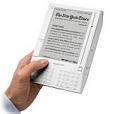
Click on the picture at top left or here to see ABC7's videoclip of their news report in which they discuss what they and Consumer Reports found when teaming up to look at 9 different e-book readers, including the Nook, Kindle, Sony, and iRex readers, in order to make recommendations for Mother's Day.

The accompanying story by Ric Romero at KABC, Los Angeles, notes there's "a lot of misinformation" out there.  That's for sure.

They interviewed some people for the story and said that one person, Kate Lombardi, will be adding fewer books to her shelves, but she's reading more books than ever now that she has a Kindle. "It's made me look at books in a different way, and buy them in a different way, so I'm buying more," said Kate.

They found that while the iPad is backlit and people can continue reading in the dark, it weighs twice as much as most e-book readers.  And they noted that it's not easily readable in bright sunlight.  While it gets points for versatility and doing "most things pretty well,"  they found it "not the best choice just for reading e-books" per Paul Reynolds of Consumer Reports.

Rich Fisco of Consumer Reports, one of several testing the Nook, found the interface problematical in that the bottom LCD screen is "little" and is "all you get for navigating around, picking books, moving though pages, and typing in titles for searches and such."

Yes. ABC7 and Consumer Reports recommended the Kindle, a fact I'm putting in for the Kindle-edition readers as it takes longer to follow links on some image-heavy sites when reading blogs via the Kindle.

Much has been made recently of the idea that the iPad can cause insomnia.  Many of us thought this was almost surely not true.   A researcher at the UCLA Sleep Disorder Center told Eyewitness News that no study or research has been done that proves iPads cause sleeplessness.

HOPE FOR KINDLE-1 USERS FOR KINDLE ORGANIZATION/COLLECTIONS?
At the Amazon Kindle forums, 4greatscotts posted a response said to be from Amazon Customer support to the plea that Kindle-1 users also get some type of organization for their first-generaion devices, though the programming and instructions won't be the same because the cursor cannot go to places on the screen as the later model does, due to a slower screen and navigation through rows instead of individual words or alpha characters.
  Here's the posting by about this (no confirmation from Customer Support Team yet).
'Posted on Apr. 29, 2010 4:55 PM PDT
4greatscotts says:

Here is the response I received from customer service today when I asked if they were going to do an update for K1 owners.

We have heard from many of our Kindle 1st generation customers that you would
like to have a better way to organize your growing Kindle libraries.  We are
currently working on a solution that will allow you to organize your Kindle
libraries.

At this time we aren't able to provide you the exact time of when this update
will release, but I'd suggest you to continue checking back our website
regularly.

Thanks for using Kindle!

Best regards,

Prakash T
Amazon.com
We're Building Earth's Most Customer-Centric Company '


 See the ongoing Guide to finding Free or Low-Cost Kindle books and Sources
  Check often: Latest free non-classics, shortcut http://bit.ly/latestfreenonclassics.)

Textbooks, the iPhone, and the Kindle - Update2

This is an UPDATE to yesterday's entry on the 7,000 CourseSmart e-textbooks now made available for the iPhone and iPod.

 Currently, a search at Amazon for textbooks not in the public domain results in about 4,400 titles, although a good number of them are not what you'd expect to see categorized as textbooks.
UPDATE 8/14/09 - Original Update was 8/13/09, 8:19 AM.
  The above "textbook" results (official textbook store not in place yet) were sorted by "relevance" -- here's a listing sorted by "bestselling" titles.

Some more detail is available about the app's functioning and the type of access available, and there are 2nd day assessments by some of the review sites.

1. SmartCourse e-textbooks can be purchased for download to your computer/laptop but are allowed to be used on only one device at a time.  If you buy one for your laptop, it doesn't seem to come with a subscription to access it online at their site.  There is no return on these, no refund.

2. Their e-textbooks can also be purchased for ONLINE access only, and with this subscription type, you can use any computer/laptop or iPod/iPhone to access the e-textbook.  In this mode, you cannot read the book unless you have a connection and are online at their site.  The subscription allows you to copy or print 10 pages at a time.  You can return the book within 14 days if you haven't printed or read more than 20% of the e-book, online.

3. In this first edition of the iPhone app, you can't add or edit notes with the iPhone/iPod, but you can view any notes you've made when using your computer/laptop to access the e-book online.

4. The "half-price" "purchase" is really a subscription rental, in that you must return the book at the end of 180 days (or 360 days if you buy a year's subscription) and then you can't reference the book if needed for your next, more advanced class on the subject.

5. CNet's Rick Broida writes:
' Long bouts of reading might prove cumbersome, as the app doesn't reflow text to fit the screen the way, say, the Kindle app does.  Each page is more or less a static image, much like a PDF. You can zoom in, scroll around, rotate into landscape mode, and so on. '
6. Your 3G cellular reception in class will have to be good.

7. The screen, especially noticed when used for a textbook, is very small.  The image above is from their website's demo and I couldn't find an image with fewer and larger characters on it.  If I were a student using the iPhone with a CourseSmart e-textbook, I'd likely always be in zoom mode.

8. PC World's Todd R. Weiss, with some whimsy, wonders:
' Then there's the potential for cheating at exam time when students can stealthily view their iPod to get information from an e-textbook to answer a tough exam question.  Hey, it could happen.  Maybe you'll have to leave your iPhones and iPod Touches at the door as you enter the exam room to prevent cheating.  Could we eventually see students being patted down by hand for their iPhones or iPod Touches at exam time as they enter the room? '


Photo credit: This a screen capture from the SmartCourse page at actual size shown there

CourseSmart offers 7,000 textbooks on iPhone/iPod

CourseSmart launches iPhone app that allows access to 7,000 electronic textbooks.

  See earlier article on CourseSmart digital textbook lease terms at "How to save on college textbooks."

  Students will be able to read digital notes and search for specific words and phrases from their iPhone or iPod Touch units.
' Frank Lyman, CourseSmart's executive VP, does not expect students to use their iPhones to do their homework, but explains that "if you're in a study group and you have a question, you can immediately access your text." '
Does this mean that the students will also need to buy a hard copy text book for the "homework" portion as well as pay half the cost of another textbook in electronic format which they'd need to return to CourseSmart at the end of 180 days?
' CourseSmart will offer digital textbooks for around half the physical textbook's retail price.  However, the service operates on a subscription basis which expires after 180 days.  After that point students lose access to the title. '

  Obviously, with battery concerns and a small screen with light going at one's eyes, the e-textbook on an iPhone would not be expected to be used for reading the textbook but, as said, for searches and reading of notes.  The article continues:
' CourseSmart's titles are not yet available on the Kindle, but Lyman hopes to see his books available wherever college students want them... '
  I read elsewhere that there've been no talks with Amazon as of this week.

Amazon drops Kindle 2 price to $299 as of today

The Kindle 2 price was dropped by Amazon from $360 to $299 today.

UPDATE 7/8/09 - 11:32 PM at bottom of this article cites various statements about the reason for the price change, which is not short-term.

I checked the comments areas in a few places, and people who just recently bought Kindle 2s (within the last 30 days, since one can return a Kindle within 30 days for a refund anyway if not interested in keeping it) are being given $60 refunds when they request one.

The phone number for Kindle customer service is 866-321-8851.

This puts the price close to or even below competitor 5" to 6" models just coming out this month without the annotation, inline-dictionary, search, and 24/7 wireless features.

I haven't seen an Amazon statement yet but will write more when I see more. [See later updates below.]

UPDATE - July 8, 2009, 6:02 PM (Original posting at 5:18 PM)
I have seen blogs again repeating the erroneous "DRM" issue* report that made the blog rounds a few weeks ago, based on a conversation with a first-tier customer service rep that there is a limit on the number of times a book purchased from Amazon can be downloaded.  The customer service representative's information was wrong. The limitations policy, readable at the Kindle Amazon support pages states
"
[Q]  How many Kindles can I use to access titles in my library?

[A]  Most books and other non-subscription items you purchase from the Kindle store may be simultaneously accessed for your personal use on to up to six Kindles (or Kindle compatible devices) registered to your Amazon.com account.

If you reach the device limit and wish to replace one of your current devices with a new one, you must first deregister and delete the content from the device you wish to replace before you can access the content in question from your new device. Please see the "Registering Your Kindle" section of our Managing Your Kindle Settings Help page to learn how to register/deregister your Kindle.  There is no limit on the number of times a title can be downloaded to a registered device.

Subscription content can only be downloaded to one Kindle at a time, and only the seven most recent issues will be available for redownload from your Kindle or from the Manage Your Kindle page.
"
This policy has essentially allowed up to 6 Kindles belonging to one account holder, to share a book. The devices sharing include a non-Kindle device such as the iPhone or iPod.  The word "most" allows for exceptions but in a year of participation in many Amazon Kindle forum, the only time I've seen customers actually coming up against the 6-device limit was when defective Kindles returned still had a license registered by Amazon for it and these were removed upon request by the customer.  I have said that Amazon should automate the license removal on any returned Kindles.  Of course, families with many Kindle devices sharing an account will run up against the 6-device limit more readily than one person will.

With periodicals and subscriptions, there is a limit of 1 device at a time rather than 6 and there is a time limit by agreement with periodical publishers on when Amazon is allowed to keep the old issues redownloadable (or successfully transferrable).
  One cannot download issues older than that time from your Amazon Kindle management area nor move an older issue from an older Kindle to a newer one, which I have found the one real 'DRM' issue in that you certainly don't 'own' your magazine issue if it's older than 7 or so issues and you want it to be displayed on a newer Kindle you bought when you no longer have the older Kindle.  Because Amazon has made no Amazon procedure possible to change the device ID given a magazine/newspaper license, it can't be displayed on the new device (without resorting to cyberspace utilities that can remove the device-ID field info, information that of course Amazon strongly discourages forums or blogs from linking to, as copyright concerns are an issue, but if anything should happen to Amazon, at least we know there are workarounds).


UPDATE - 7/8/09 - 11:25 PM
The NY Times blog gave this reason for Amazon's decision to drop the price on the Kindle 2.
In an e-mail message, Andrew Herdener, an Amazon spokesman, said the company was passing on savings to consumers from the increasing volume of Kindle sales and the decreasing costs to manufacture the digital reading device.

Amazon’s jumbo-size Kindle DX, which it introduced in May, remains $489 and is currently out of stock on the site.
AP reporter Rachel Metz quoted Amazon's spokeswoman Cynthia Portugal:
Amazon spokeswoman Cinthia Portugal said the price cut, a classic move in electronics marketing, is not just a short-term promotion.

"We've been able to increase the volume of Kindles we're manufacturing and decrease the cost of doing so," Portugal said.
ThinkEquity analyst Ed Weller opined for AP that
[The $299 price] "feels like a much hotter price" than $359.

"They'll sell more of them, and they'll sell more books," he said. He doesn't expect Amazon to follow the Kindle price cut by raising digital book prices.

"DRM" - Digital Rights Management

Working with the Kindle 2 and DX Web Browser

The experimental Basic Web browser on the Kindle 2 can be used from almost anywhere a cell phone works and at any time.

Expectations for it should be in line with what you'd expect from any mobile phone except for how much of a web page you can see on the screen (considerably more with the Kindle 2) and no color.  Mobile unit web browsing is best done on sites which make versions for mobile units' small screens.

 With a Kindle, you don't have to hunt for a WiFi hotspot and hope that it's free, because Wireless access is almost always available where there's Sprint cellphone coverage, but it's slower than WiFi, which is slower than your normal cabled Internet experience.

  Most of the steps below (but not the 5-way button portion) work on a Kindle 1 also, though the Kindle 1 is slower in response time and doesn't always finish rendering a page with larger photos.

The key is knowing how to choose between several settings offered by the Home page's Menu option for "Experimental" which gets you to "Basic Web" (which you just click on, as the other options are not available there, only described).
  The Kindle will ask you if you want Wireless 'On' if it's not on already and then you can OK that.

  You are then taken to the Kindle's Bookmarks page with a choice of websites for mobile unit access.  Press the Menu key there and choose Settings.
  These are all toggled options.

  The most used Settings to choose from when browsing would be:
    1. "Switch to Advanced Mode" (if you're in "Basic Mode)
          ("Desktop" mode on DX's)
          or "Switch to "Basic Mode" (if you're in Advanced Mode).
    2. "Enable Javascript"
    3. "Disable Images"

Choosing Modes:
. Basic mode, Disable Images - Fastest.  Use when you just want data quickly and don't want to wait for images to load.
. Basic mode, Enable Images - 2nd fastest.  Best with simpler websites and small photos.

  With Basic mode, article bodies will be in B&W rather than the harder to read gray shades that emulate color gradations.
  You'll need to remember that on pages with columns of links or ads, all of the first column's text will show up first, going down and you have to "Next Page" (or down-arrow) through them before getting to the center column for the article.

. Advanced Mode - Use this when you want to see the full width of a web page and all columns showing.
   The browser will then make the fonts TINY to fit it all in and will emulate colors, giving harder-to-read multi-gray shaded text and sometimes the background may be too dark.
  With some sites, it can be surprisingly readable though some will want a magnifying glass.
  With this mode you won't have to page through several Kindle 'pages' of a website's left column.
  The Kindle often chooses advanced mode, and when I want to read an article in the normal sized font, I'll switch to Basic and do the NextPage thing.

. Advanced Mode, Enable Javascript - the Kindle browser often switches to this when it knows javascript is needed to load the page at all.  This will be the slowest mode.
  Sometimes the javascript is needed just for an ad and you can do without it, and at those points I have sometimes tried "disabling" javascript to speed things up.  But most won't bother as it doesn't make that big a difference.  If javascript is needed but isn't enabled, the page never loads, so I tend to leave it alone.

Other web browser options:
. The browser Menu lets you "Enter URL" to go to a specific page you want.
. You can "Bookmark This Page" if you're on a webpage you want to return to without having to type the URL again.
. There's a (current-session) "History" page so you can jump to a webpage you want to revisit.
. You can "Go to Top" of the webpage.

Moving around the webpage
You can move around the page with the 5-way button, which will take you to areas for input, or links to click on for another web page or web-page area, and allow you to scroll down (instead of having to use 'NextPage' if you're on a long page.
  To get back to the previous "jump" (from a link) press the "Back" key.

. You can generally change the text size but not the line spacing on a web page.
. You can download some files offered, usually "TXT" files and unprotected MOBI, PRC ones.  The Kindle format is AZW, and you can download that and AZW1 files, though I've never seen these offered outside the Amazon store.

See an example of links on a Kindle webpage.   For other webpage examples for both the Kindle 1 and 2, see the screen comparison page that I made for these.

For more information and screen samples, see Section 6.1 "Using Basic Web" in the "Kindle 2 User's Guide, 2nd Edition" -- this is at Location 834,

Caution: Using wireless for browsing will drain the battery faster during a session than reading a Kindle document will.  It'll be a shorter time before you need to recharge.  Here are customer service advisories for how to keep the battery in good shape.

TIP: When sending an email from gmail.com or yahoo.com, you'll get an alert that a connection could not be established with the website's servers.  98% of the time, it's a false error alert.  The email goes through (but typing on this unit is arduous, at best, so I e-mail rarely), and the same thing occurs with posting a reply to a forum.  The reply does go through and is posted despite the alert.  Do log in before posting, though.

The Basic Web browser on the smaller Kindles is extremely handy for quick lookups when away from your home/office computers.  It isn't something you want to do at length, though I was surprised that Wired can come through so well, with good resolution on the photos on the Kindle 2.

FILE DOWNLOAD - BOOKMARKS
You can download a file of bookmarks I collected for mobile-optimized sites, which will load faster.

( If you find blog entries like this one helpful, please check the "Interesting" box so I can get an idea of the level of interest for how-to's for features not often used -- judging from what I read on the forums.  Thanks for taking the tme. )
  7/5/09 - I've eliminated the 'Interesting/Cool' Google widget because it caused the page to take too long to load, but on the Tips/Guides, it did give me good (easy to rate) indication of interest in those. Thanks to those who took the time let me know.


Check often:  Latest temporarily free non-classics or late-listed ones.
  Guide to finding Free or Low-Cost Kindle books and Sources.  Top 100 free bestsellers.

Sony reader screen comparisons and the Kindle

The enlarged version of the photo at the left, from the article by Simon Cohen at syncblog.com, shows the significant loss in clarity and readability with the touch screen technology used for the Sony PRS-700's e-Ink screen.

  After lamenting that the Kindle isn't available in Canada yet Cohen explains the touchscreen's effect on clarity:
'...Because Sony's engineers had to layer a capacitive membrane over the E-Ink display to enable the 700's touch-screen features, they reduced the amount of ambient light the eInk receives, and thus the amount it can reflect.  The result is (when compared to the 505) like reading through a thin layer of onion skin paper.  Contrast is reduced and some crispness at the edge of letters is lost.  Worse still, this top layer is quite reflective and depending on where your light source is located, you need to tilt the 700 slightly backward to avoid the glare...'
In this comparison of the two Sony Readers, there are also caveats that will be familiar to some Kindle users when it comes to the e-Ink screens, which most reviewers find far easier on the eyes for any length of time than reading from an LCD screen (which can do color and backlighting at a cost to battery drain in addition to eye fatigue, though with better refresh rates).
'Some people might be aware of the light gray background of the screen itself – indeed this is probably the cause of my perception that the ink could stand to be a little darker.  We're all used to seeing black ink on a white page, or at least off-white and there's no escaping the fact that the light gray doesn't provide as much contrast as a piece of paper.

The good news is: you get used to it quickly and after a few chapters you barely notice it at all.'
Then he explains the black flash between page turns:
'Turning pages on the Reader produces a momentary flash of black before the ink resolves itself into the new set of words. This happens anytime the display needs to change what it's showing.  While a little disconcerting at first, you again grow accustomed to it. The transitional effect is caused by the nature of eInk displays.  The "pixels" work more like an etch-a-sketch tablet than like a typical LCD display.  With LCDs, each pixel can change on it's own, very quickly, and go from one colour to another in an instant.  eInk on the other hand exists in more of an ON or Off state.  To switch between these states, an electrical charge is needed.  Moreover, it seems that the entire area that is to be re-drawn must be first "cleaned" by turning all of the pixels on, then off.  Only then can the final image be rendered.  Odd as it is at first, I'm so used to it now that I wonder if a transitionless page turn would be an improvement.'
Cohen goes on to detail quite thoroughly the many differences between the two Sony readers.

iPhone 3G upgrade reactions and the Kindle

I just read some interesting stories about 1) the new iPhone 3G's features and pricing and the free upgrading of older iPhones at the same time (some companies do this for even large changes in system capability; and 2) the server-chaos that resulted from up to 6 million iPhone users attempting upgrades at the same time that first-time buyers were trying to get one.

  This did remind me of reactions from the Amazon Kindle community when Amazon said Wednesday, in response to reporters' questions, that there was no upgrade path for early Kindle users to the Kindle DX.

Two Kindle-owner requests I've read, in response:
  1) a question as to why the native pdf support for the DX is not made a firmware update for the Kindle 2 released late February so that inaccurate conversions don't have to be accepted (the small screen viewing affects conversions also) when Sony's 6" models can do this already (including even DRM-protected ones form the library, along with reading ePub files).

  2) some new Kindle-2 owners just past their 30-day trial period have requested the ability to update to the DX for the difference in price.  Many owners using their Kindle-2s since March (we are talking mainly April as an interval) are requesting some kind of upgrade-path at all, but Amazon's customer service responses are that Amazon's policy is that the Kindle-2 owner sell the unit, used, and then buy a new one.  Doable but some customers feel uneasy about the response.

 A key factor, as I've said before, is that with Kindles, as with cable-tv-program providers and their receivers, there is an ongoing $$ relationship with the vendor that involves the customer regularly buying (even eager to buy) the vendor's main products to use on that vendor's receiver.  So there is a disconnect there when Amazon shows no interest in upgrade paths.

Native PDF support
  I can understand the resistance based on publishers' concerns re DRM situations, but the Kindle 2 (with a faster processor than the Kindle 1) really should have the native pdf support for non-DRM'd PDFs as a feature when Sony was able to do this in 2008.
  Kindle users should also bear in mind though that some PDFs made for 8x11 pages will not be particularly readable on 6" screens,  and in some cases a conversion to a MOBI or prc file could work better for readability on text-based PDFs - which is still an option even when a unit has built-in Adobe support for PDFs.

  The Sonys have their drawbacks and lack of features though: no 24/7 wireless, an unclear PRS-700 screen and, on the PRS-505, no search feature whatsoever, no inline-dictionary, and no highlighting and annotation functions.

iPhone 3G rollout problems
With up to 6 million owners wanting to upgrade while new customers were in lines overnight for the new unit, and a new certification process put into place before the 3G capabilities could be accessed, many old phones stopped working and new phones could not be activated, to the degree that there are many stories about this.
  I'm surprised that Apple didn't foresee this though.  Their servers were hammered.  The best scenario for luckier users was not being able to update the old phone though it still worked otherwise.  iPod users can upgrade also, for $10.

iPhone 3G Pricing
  A plus for new iPhone users would be the drop in price.  Barely a year ago, the 8-gigabyte iPhone would have cost $600; the new 8-gigabyte 3G is $200. However, as David Pogue points out:
"The basic AT&T plan — unlimited Internet and 450 minutes of calling — now costs $70 a month instead of $60 (plus taxes and fees), and comes with no text messages instead of 200. (Adding text messaging costs at least $5 a month more.)"
Well, those who complain about the Kindle's price should note that the actual one-year cost of the iPhone with Internet (before taxes and without text messaging) is:
  $70/month x 12 months = $840 + $200, or a total of $1,040.00 for that first year.

Kindle-2 pricing
  The Kindle 2 with its 24/7 wireless access to the web is $360, and after you add up the Internet charges, the total cost the first year is ... $360.
  And in the 2nd year, no cost for Kindle use, while the iPhone would cost $840+ for the 2nd year.

  While some may not want a clear and good-sized e-reader with 24/7 wireless access to the Net, it's foolhardy to say, when understanding the costs of wireless and an e-ink screen, that a total cost of $359 is "too expensive."

Kindle-DX pricing
  And now an extra $130 total cost for the Kindle DX gets you a reading screen that is 2.5 times the surface area of the Kindle 2.

Kindle and the iPhone
Many have both the iPhone and one of the Kindles.  Makes sense to me, as long as you can afford it.  Especially with the KindleApp on the iPhone now and sync'd access to the Kindle library.

I do like the iPhone but AT&T's reception is not good here and and there are features I prize in my own cellphone (video recording with 3.2Mpixels that is quite good, voice dialing, business-card info-autoread, phone-to-phone photo-sending, and a memory card slot which I do use as the main space), which aren't included with the iPhone.  Apple's iPhone App Store has a terrific set of apps though that don't require transfers from the PC and no 'hacking' of the unit to run them.  I'll be interested to see what Apple and Verizon (my cellphone servicer) have in mind in June.

Some Kindle stats lost in the main stories

Gizmodo writer Mark Wilson was at first aghast that Amazon would offer newspaper publishers only 30% of the revenues, which left 70% for themselves.  He updated his article to say this:
"Maybe the NYT doesn't have a better deal than the Dallas Morning News.  According to a reliable source in the know, The New Yorker's Kindle split is divided 33% New Yorker, 33% Amazon, and 33% wireless carrier. Without ad subsidies, it's hard to view this model as sustainable."
Business Week's Dan Frommer noted a statement from Jeff Bezos' announcement last Wednesday (the 6th) during his live-blog of the event and wrote:
"[Bezos} said that when Kindle titles are available, they now represent 35% of those books' sales.  There was a huge spike when Amazon started shipping the Kindle 2 earlier this year"

Kindle DX and its target audience


So this is not the anticipated 'K3' but the 'DX'?

  Has the lower price than was expected confused the presupposed division of target audiences for Kindle-1&2 users?

  It's still packable and there is less room used by the keyboard.

  These are first reactions on the day the DX was announced.
  Online mags are showing the "first official pictures" of the DX which are all pics from Amazon's own Kindle DX page, which has a large video demo and 'guided tour' of its functioning.

  Re DX vs K2, think K2 enlarged beyond purse-size, with no buttons on the left side (favoring lefthand-users for one-handed use) and less vertical space given the keyboard (long a wish of many).  So what else does it do besides let you see content better or see more of the same while also being heavier to hold when reading books?  The Amazon page has charts showing the differences between the DX and the K2.  

  Unfortunately, they blare that it can read PDFs natively while the K2 cannot, which means they likely don't intend to provide a firmware update that will provide native PDF support for the K2 even if it would be on a smaller screen.  Not an admirable move.
  But for those who like to stockpile and miss their K1 SD cards, it will hold an average 3500 text-based books.

  And there is said to be more RAM (no figure given) which usually means faster processing capability and definitely better ability to handle web-browsing of complex pages while the auto-rotating feature (which is optional) ensures better visual displays of webpages, especially online-newspapers.  While I would not want to replace my K2 as it is always with me and fits well into my purse, no extra carrying care needed, I may sell my K1 finally and ultimately get this for home and special use outside.

  I would not get it for just books.  Nor want to hold something that large for my daily reading of books and my newspaper feeds and subscriptions.

  But even if native PDF support were to be included in the K2 later, it would be, on a 6" in screen, unreadable when the pdfs are image-scans of small text.

  So for me it's not a 'replacement' for the K2, for K2 owners.  An addition maybe, for those with enough spare change.  New buyers may be attracted to it over the K2 though, but they'll need larger carrying cases and it'll be a separate item to remember to carry or pick up unless one uses a briefcase or backpack or quite large purse.
  Those with poor eyesight, who have problems with the smaller e-readers, will also find it an attraction.

  They don't seem that different in size in some photos (though the difference is large enough for those who carry their K2s everywhere with them), but this image and this one as well both show otherwise.

 And then there's THIS! ---)   Whoa!  I've never carried around a book that size but do have them for home-use.

  For those whose primary focus is carrying books or a library of books wherever they go, the segment of that group that carries Kindles in their purses will find this less attractive, but for students and business professionals, it will be quite doable in backpacks and briefcases -- and much better for technical textbook reading as well as business presentations.  I expect professors and business users will find the PDF support and larger screen well worth it to handle papers and presentations.
Peter Glaskowsky, writing for CNet, opines that this unit will not be ideal for textbooks for the natural or formal sciences, and it's the lack of color differentiation that is most key there.

But soon the full 8x10 screens will be (and some already are) offering the ability to write directly on the screen, with touch screen control, and able to show a normal multi-column newspaper layout.  The Kindle DX still displays newspaper articles as contained text (which has been fine for readers like me).

With two units this similar though, offered only 3 months apart -- ironically with the pricing being barely more than a $100 difference and with PDFs natively read in the unit (which means that they should be able to incorporate this as an upgrade to the Kindle 2) -- it can cause some people to hesitate more before deciding what to buy - one of the Kindles or a simpler, less capable and less expensive e-reader by anyone while the market settles down. (Nevuh happens.)  Still, for me, the more options and capabilities offered, the better.  

Since PDFs, even formatted correctly, are not ideal when scaled down to the Kindle-2's 6" screen and therefore no threat to sales of the DX if readable on the K2 also, Amazon should make PDF native support upgrades to the Kindle-2 now or customers will likely wonder at what some could consider bait and switch tactics.  I'm hoping they'll do the right thing.  Or explain why it can't be done.  A competitor can do it, why not Amazon?

In the meantime, many bought the K2 for the small size and 24/7 wireless factors and won't be overexcited about spending yet another $130 for a larger version they can't as easily carry around.  The paperback-size feature has been a large attraction and I'm sure it will continue to be.

 A quick look at the Amazon forums shows less interest (at the moment) in the new model than I'd expected to see from current Kindle-1 and Kindle-2 owners.
 My next purchase of $350 or over will likely be a 10" Netbook - for now, likely the Samsung, but that can change in a matter of days in this world.  The Asus I had been planning on before reading about the Samsung, is now available for $100 + a wireless contract (not WiFi but 24/7 wireless for about $50-$60/month.  So much to consider in this rapidly changing world.

Nevertheless, business professionals and some students will find the $489 a good price when 24/7 wireless is included (for how long for free?) and if textbook publishers are sane about their pricing for Kindle textbooks.  As some have pointed out earlier, textbook publishers have been making customized books for universities under special agreements that still give them a decent margin.  Would those be willing to do a general Kindle version instead and price it appropriately?  In this economy you'd think printing companies would take stock and seek survival rather than grossest margins :-)

But Amazon has done well, where other companies haven't, in this recession and if they do well by all their customers who have already invested money in their Kindles, they'll stay ahead of the game.  An important If.  The Kindle is not like a separate TV purchase, it's more like a cable-TV subscription cable-tv-program receiver unit.  The unit, for the vendor, is about the content that can be sold.  That's something for Amazon to keep in mind.

In the meantime, if I had to make a decision between the two units today, I would still choose the K2, for its size, as I'm one who carries my Kindle everywhere and I love reading on it anywhere I am.  But if not interested in books that much or in just reading news on the run, and very active in sharing paperwork and presentations, and with no Kindle already, I'd spring for this.

UPDATES:
To get an idea of the DX features and functioning, here is a a copy of the Kindle DX User’s Guide 1st Edition in PDF format, readable on any computer.

Here's a good report, with good photos, of Jeff Bezos' announcement/press conference today, by FastCompany's Chris Dannen.

  Gizmodo's Brian Lam reports first reactions to a very brief hands-on experience with it.  This includes Gizmodo's own photos and their video of this.   They mention that it's almost twice as heavy, with somewhat stiff action in the buttons and a response-time that is almost as fast as with the K2 because although the DX has a faster processer, it has much more data to process for a page.  Brian was unhappy with the autorotate's relatively slow processing.

  Wired's Brian X. Chen weighs in with a hands-on assessment and more photos and echos Gizmodo's hands-on re the slow roundtrip for an inadvertent auto-rotate (7 seconds) while finding the 5-way wheel not to his liking on either the K2 or DX (I like its direct navigation though; even if it's sluggish it saves us from the many dialog-screens of the Kindle-1 before getting where we want).  He also finds the web-browsing slow but doesn't say relative to the K2 or to a normal computer's browser.

  Good, varied screen examples by Engadget's Joshua Topolsky during the live event.

  Hmmm, they'd almost have me (if I didn't already have a purseable Kindle2) with the note in their press release that sheet music can be used with this and page-turns done with a press of a button).

  Thinking...if the DX had been first, many would jump at the 'new' 'COMPACT' K2 :-)
What does Amazon gain with Stanza?

Update to Amazon Buys Stanza.

What Amazon gains - by Chad Berndtson:
1. Exploding base of e-reader consumers - 1.3 million users worldwide
2. More than 40,000 books downloaded a day from Lexcycle
3. Successful team with expertise, supporting widely different formats
4. Possible willingness to use Stanza for the kind of 'free'-use items phase that brought Apple its success with the iPod.
5. Further consolidation of a market it already dominates
6. Pre-emptive move before Apple, eager to dominate the digital-everything market, could buy it.

The Kindle and Sprint EV-DO's 24/7 wireless costs

There are no wireless costs at this point for the customer.  But there are for Amazon.  Information Week's Howard Anderson writes:
"On vacation, my wife was busy reading books on her new Kindle 2.0.  Do you know what they call Sherpas in the developed world? Husbands.  For years, I would go on vacation with a hernia-producing bag of reading material.  I was carrying atoms; now I carry electrons -- much lighter. The publishers make money because they don't have to buy paper and pay printers and the Postal Service.  Amazon makes money because it doesn't have to ship anything.  The consumer (me) gets books for $9.95.  The Kindle is as impressive as the iPhone, maybe more so.  How is this possible?  Because Sprint Nextel has excess capacity, which it sells to Amazon.  If you can't use your extra capacity to sell cellular service, then wholesale it to someone who can.

So Sprint Nextel is going to try to replicate what it's done with Amazon with any number of consumer electronics companies, such as Garmin, which offers a GPS device.  And since Sprint has excess capacity, it can assume that its costs are (almost) zero.  No billing expenses, no customer service.  That was what really cost money..."
It seems Sprint is looking to make similar deals with other companies, including Garmin.  Might that have an impact on wireless network speed?  There are times when I wonder if they intentionally throttle the download speeds for the Kindle access (unless we happen to be at the Amazon Kindle store).

Also, there are now many articles mentioning the enthusiastic use of the Kindle 2 by either the writer or the spouse.  I was surprised to see a somewhat over-the-top love letter to the Kindle by Slate.com's Jacob Weisberg, who is Slate Group's chairman and editor-in-chief and author of The Bush Tragedy.  A few of his remarks:
"I'm doing my best not to become a Kindle bore.  When I catch myself evangelizing to someone who couldn't care less about the marvels of the 2.0 version of Amazon's reading machine -- I can take a whole library on vacation!  Adjust the type size!  Peruse the morning paper without getting out of bed! -- I pause and remember my boyhood friend Scott H., who loved showing off the capabilities of his state of-the-art stereo but had only four records because he wasn't really that into music.

So apologies in advance if I'm irksomely enthusiastic about my cool new literature delivery system. Like the early PCs, the Kindle 2 is a primitive tool...But however the technology and marketplace evolve, Jeff Bezos has built a machine that marks a cultural revolution."
But then he goes too far, in surmising:
"The Kindle 2 signals that after a happy, 550-year union, reading and printing are getting separated.  It tells us that printed books, the most important artifacts of human civilization, are going to join newspapers and magazines on the road to obsolescence..."
WELL, I don't think so.  This is more like the idea that television would spell the death of movie theaters.  Most of us K-readers want both DTBs ("Dead Tree Books") AND K-books and periodicals (plus personal docs) on our Kindles.  I read far more than I did before but also find myself spending more time in Barnes & Noble enjoying hard-copy books of the type that cannot be shown successfully on a small e-ink unit.  However, in time, that will change too, I suppose.

 But a book or magazine with its own unique physical attributes and layout will always be an attraction, and a special treasure, although for actual ease of reading, it's hard to beat being able to change the font size and spacing between lines to suit our particular eyesight preferences and being able to carry around so much with you when out of the home.  Long waiting lines are no longer a problem for me.

If you click on the image that starts this entry, you'll be at a page that explains how wireless technology works, without hammering the reader with jargon.

PDF and EPUB converter ON the Kindle

Gizmodo and O'Reilly report today that there is now a utility offered which runs ON the Kindle and will convert [text-based]PDF and EPUB files to the Kindle's .mobi format.

Called "Savory" and developed by Jesse Vincent, it does not open rights-protected (DRM) books, since that is clearly illegal. As Gizmodo writes:
'It converts specific unprotected files on the fly—from PDF and ePub to Mobipocket, so it feels like they are supported by the Kindle 2. (Not, alas, the first-gen Kindle.)'
Gizmodo goes on to quote Jesse's blog:
'Savory installs a small program which runs on your Kindle and watches for new files in the 'Documents' directory with names ending in '.epub' and '.pdf'. When the system notifies Savory that a document has shown up, it wakes up and runs an open-source file conversion program called Calibre. Savory also updates your Kindle2's browser configuration file to tell it that the Kindle can now handle .pdf and .epub documents.'
However, Jesse is not sure that this wouldn't void the warranty. That is a big uncertainty.

And, the process is not for the faint of heart when it comes to computers. Jesse describes it on his Savory page and reminds people that it could void your warranty.

He also has done a second version over the weekend, which converts a 2nd time, from the converted text to an image-based version.  That's a beta version and the process results in two files, neither perfect but you can decide which one you want to keep.  He's asking for feedback. The image-set version will look more like the original copy but that may not be ideal on a small screen and it will be a much larger file. I would read all the feedback before tip-toeing into this.

I am not recommending any of this be done but am informing the interested that it's available in a Kindle world :-)

UPDATE (4/12/09 at 5:20 pm):  ZDNet's Joe Brockmeier writes on 4/10/09 about this, saying "Jesse Vincent is doing Amazon’s work for it...He released the first version on April 3rd, and has since added support for “picture perfect” conversion of PDFs to the Kindle. The screenshots look very sweet indeed"