Showing posts with label len edgerly. Show all posts

The Kindle Chronicles interviews KindleLending founder. Kindle Notepads.

THE KINDLE CHRONICLES Podcast for this Friday
The Kindle Chronicles host, Len Edgerly,  interviews Catherine MacDonald, founder of Kindle Lending Club this week.

Len's text intro for the interview that begins at 16:22 of the podcast:

"Catherine MacDonald, who lives on the island of Gozo in the nation of Malta in the Mediterranean, spoke to me on Tuesday, January 18, 2011, by Skype about how she and her husband came to create the Kindle Lending Club.  It’s one of several startups taking advantage of the Kindle’s new lending capability to put borrowers in touch with lenders.  Their Facebook page already has more than 8,000 'likes,' and you can also follow the action on Twitter. "

American Consumer News distributes a Press Release about the new KindleLending site's function as a free website providing a "crowdsourced virtual library for Kindle" connecting e-book borrowers and lender via its current 7,000+ membership which has seen 2,500+ book loans in the past couple of weeks.


Taking Notes on your Kindle
On that podcast also: "Hunter Davis provides a creative solution to last week’s query about how to take notes on your Kindle." and Len suggests you try the free, downloadable Kindle Notepad from Will DeLamater's EduKindle.


Kindle 3's   (UK: Kindle 3's),   DX Graphite

Check often: Temporarily-free late-listed non-classics or recently published ones
  Guide to finding Free Kindle books and Sources.  Top 100 free bestsellers.
UK-Only: recently published non-classics, bestsellers, or highest-rated ones
    Also, UK customers should see the UK store's Top 100 free bestsellers.

Video Comparison of 4 E-readers + another Nook and Kindle Face-off

Len Edgerly's whimsically titled Wolf Hall Tournament of Ereaders video is a comparison of features and functioning of four e-readers and is the newest feature at his The Reading Edge site, which has interesting reports and interviews in connection with the many e-readers available currently.  Here's the direct link to Len's blog report with embedded video.

 To get the larger version of the video, click on the top left image or the link at the left.

 Len loves e-readers and buys them to try them out, not waiting for review copies.  In this case, he also bought 4 copies of the "Wolf Hall" book because the alleged 'standard' of ePub between books with digital-rights-management added to the book files is not quite standard yet.  Nooks can read Sony books sometimes but not vice versa, Adobe holds the DRM reins, and the book vendors tend to add something a bit different to theirs.  Despite talking to customer support at a couple of e-book stores, there was no support given to Len for using other vendors' files on the e-readers.

The 4 e-readers reviewed for effectiveness of functions are the Sony Pocket Reader, the Kobo Reader, the Barnes & Noble Nook, and the Amazon Kindle 2.   The Sony PRS-600 has known glare and contrast issues due to an additional layer for a touch screen, and Len did not keep his, so it's not included.  Also, it doesn't have wireless at all, for the higher price.  The Sony Pocket Reader and the Kobo are on a more equal level as they both have no wireless to speak of and no basic study features such as inline-dictionary, searches for a character, highlighting or notes.   The Sony Pocket reader has long been popular for its "pocket"ability and easy-to-read contrast-ratio, but the Kobo has a slightly larger screen.

Seldom do online gadget reviews go into how the advertised features actually function and even tend to not mention basic ones like the dictionary, search, and annotations many like to use with an e-reader.  The few I have seen that do discuss functioning include the recent Laptop Magazine report on the Kindle DX Graphite and one on Sony readers by Willson Rothman of Gizmodo.
  A favorite for its description of how Kindle features work, in general, is by boygeniusreport.com, done for the Kindle 2, which Len uses for the video comparison.  And there's one by Jacqui Cheng at Ars Technica actually describing how the new software update's features work.

  That's especially what I like about the video.  Len lists features important to him and shows HOW each is implemented on the two e-book readers that have screens unimpeded by an extra layer of glass and which happen to be the two leading e-readers in sales today -- the Nook and the Kindle 2.

  There'll be a new Nook soon (Nook 2 and the new Kindle 3 (and UK Kindle 3) in late August.  We know what the Kindle 3 will have but have no idea what the new Nook 2 features will be.  In this video, you'll see how each handles (1) dictionary look-ups, (2) searches for a character's name or mentions in a book, and (3) highlighting and note-taking as well as how to find a highlight or note you made.

  These are key differences and most reviewers have not gone into the functioning of these features vs other e-book readers at all.  So Len has done quite a service here.   It's 28.5 minutes long, so set aside some time to watch it if you're curious about the differences between these models.

  The one thing I'd like in the future is Len using a tripod behind him and showing the full model or full screen as he shows the functioning, because the close-ups can take you out of context, and often the video-camera doesn't focus fast enough when going close-up anyway.  The actual words are not as important as the actions with the screen and sometimes keyboard in full view. Closeups could be added as needed later.

  But I've seen no one else do such a clear comparison of book readers before, showing how features are implemented on each.  And Len Edgerly's presentation is devoid of the 'seller' characteristics you often see with video reports.  He likes what he likes, with reasons given, and is enthusiastic, but he's also fair-minded and open and an e-reader/gadget addict who cannot have enough of them :-).

  The surprise for many is usually the password-protected, private webpage we have at Amazon (if we approve server backup of our annotations) that shows all our highlighting and notes for each book we download from Amazon, in chronological order and copyable to a text file so we can edit the notes in a separate document, and of course is printable.
  It's really an amazingly helpful private webpage which I never saw mentioned in college pilot studies feedback.  In fact, students in those studies reported difficulty with just highlighting (which I find easy to do).  What i like is you can UNhighlight too :-), something hard to do with a physical book.  But notes typed in are slow-going with that keyboard.  However, I prefer it to a hard, flat-surfaced virtual one.

  Now that the annotations webpage has been modified by Amazon to include the Facebook and Twitter features, I should add that the most useful first page there is the one listing your books, showing which ones have or don't have annotations, etc.  Here's a sample of a page showing a selected book and annotations for it.

Len has written about the Wolf Hall video in conversations on Twitter and in comments at Youtube and feels he should have mentioned the Nook's "Lend me" feature, which is better than no lending feature but, if the publisher allows the feature, the loan of a Nook book is restricted to one loan ever, for each book, for 2 weeks max.

  Kindlers compare that with how the account-sharing plan is implemented at Amazon, in which a book can be shared among 6 devices on an account, with no mention of 'household' or 'family.'  Kindle Customer support helps with the how's of registration and deregistation of other individuals' Kindles on your account, and many spouses use the feature, so that one book can be read at the same time by both for one purchase.  One would have to put a lot of trust in anyone who uses that account as the account owner is responsible for all the charges.  There is a long-running Amazon Kindle forum thread on how Kindle-owners use the feature.

  Where the Nook and Kobo shine is the ability to borrow public library e-books - a rich feature for a city with a large collection of these (New York City) but less exciting in many other areas.  Check with your local library.  I wish Amazon had the fortitude to work out arrangements with libraries.
  That's a primary factor for some, but if it's not very important on a personal level then how an e-reader works will be key.  And Len's video will give you a very good idea.


E-reader Faceoff: Kindle or Nook? Here's a Written Comparison
Also appearing last night is a short article by Mark W. Smith for Free Press (freep.com).  An excerpt:
' The big difference here is the Nook's small color touch screen at the bottom of the device. The Kindle features a physical keyboard and a handy five-way rocker button for navigation. The Nook's color touch screen is nice, but the navigation can feel disjointed as you touch one screen to move the cursor on another. And the bright color display can be distracting while you read. '
He has good advice on choosing wireless options and lists unique advantages of each e-reader over the other.


Kindle 3   (UK: Kindle 3),   DX Graphite

Check often: Temporarily-free late-listed non-classics or recently published ones
  Guide to finding Free Kindle books and Sources.  Top 100 free bestsellers.
    Also, UK customers should see the UK store's Top 100 free bestsellers.

The Kindle Chronicles Friday Podcast - catching up

Since I am behind and catching up with a favorite Kindle website, The Kindle Chronicles (TKC) Friday podcast, I thought I'd pass along what I'm enjoying, realizing that many newcomers to the Kindle (and even some oldtimers) don't know about this very informative and entertaining Web feature.

 These are programs that can be listened to when there or downloaded for listening on your mp3 player while reading the weekly TKC features that include Kindle (and iPad) news, Tech Tips, Kindle Content, Comments from listeners, and above all the unique audio interviews that Len Edgerly does with those in the Kindle and e-reader universe.

  Here are the interview subjects from the last four weeks along with Len's interview descriptions for them:


'Jay Marine
, Amazon’s Director of Product Management for the Kindle, spoke with me from Seattle on Tuesday, May 11. His job in such conversations is to avoid any predictions of future products or enhancements, and let’s just say he’s good at his job. But if you listen between the lines, you’ll hear encouraging passion regarding Amazon’s commitment to keep those Kindle innovations coming.'


'Mike Elgan
, Silicon Valley-based columnist, writer, speaker and blogger, this week published a ComputerWorld column titled “Why iPad Owners Need a Kindle, Too.”  In our conversation on May 18th, he provided background to his list of 13 reasons why he thinks every iPad owner who loves books and reading also needs a Kindle.'

'J. A. Konrath’s AmazonEncore deal has everyone in publishing talking, it seems.  In a Skype interview on May 26 linking us in Denver and Chicago, Joe told the back story and details of the deal, in which Amazon will release the Kindle version of the seventh book in his Jack Daniels police mystery series, Shaken, on October 26, 2010, to be followed on February 22, 2011, by the paperback edition.  Click here for a free sample of Shaken and click here for a Digital Book World Roundtable discussion of Konrath’s accomplishment.'


'James McQuivey
in a conversation recorded on June 1, 2010, explains why he’s worried Amazon may be about to miss a once-in-a-lifetime shot, if they don’t come up with an iPad killer.  James is vice president and principal analyst at Forrester Research.'

Be sure to leave Comments there if you have a question or feedback about the show.


 Guide to finding Free or Low-Cost Kindle books and Sources  Top 100 free bestsellers
   Check often:  Latest temporarily free non-classics or late-listed ones.

iPad as an e-reader? - Not in sunlight. Update3

Len Edgerly, host of the excellent TheKindleChronicles and TheReadingEdge podcasts, is also a long-time Apple fan, and then some.  You can read his Twitter tweets for the last two days to see just how much, as he was in line at 4:30am to get his iPad.  He loves it and has written and video'd first impressions.  The aspect that will interest readers of e-ink e-reader blogs is how the iPad does in direct sunlight, and the images borrowed for this blog entry leave little doubt on that.
  You can read the words in the original, larger image.

Len also did a video of his first impressions.  There is wind noise in the beginning but it clears up within a minute or so.  Near the beginning he shows the iPad and his Kindle (U.S.) side by side, outdoors.


Teleread's Paul Biba points us to an excellent article by Jane which, in addition to spelling out the beauties of the iPad, also draws needed attention to why it is not meant for reading in sunlight (where the Kindle does especially well).  Paul inserts the picture comparison and some text from Jane's report:
'`This is something that most reviews have skipped over:
IMG_5572-300x200.jpgIMG_5571-300x200.jpg "The iPad is fairly heavy. It weighs 1.5 pounds versus the Kindle’s 10.2 oz. Plus, it is unuseable in bright sunlight. You really, really need to have some shade to be able to see much of anything. You can see the comparison between the two. The indoor picture is the exact same screen, finger prints and all." '
The article by Jane has plenty of pro's for the iPad otherwise, so please read it.  The iBook reader app is beautiful indoors, though there is no note-making feature on it yet (doable on the Kindle app for iPad).


Since this is an image-happy blog entry, here's a delighful picture by the Denver Post.  The larger photo, slowly viewable upon a click, is done with Adoble Flash but, ironically, cannot be seen by iPad users due to lack of Flash support.

UPDATE 3 - APRIL 6, 2010 - 3:40 PM PM PST - Original posting was at 2:07 PM PST)
  While identifying the source, I somehow forgot to identify the two main people in the photo.  This is of Len and Darlene Edgerly, up early to get the iPad and enjoying what they see.  This is the same Len Edgerly who made the photos and video in the first section above, in his trials of using the iPad outdoors in sunlight.  Outside of that direct sunlight scenario, which Len and other Kindle users with iPads will be using their e-ink Kindle for, he is thrilled with his iPad, as you'll see in his Twitter stream that I linked you to.

 The Denver Post offers to let us share the larger photos from the slideshow, so I made a straight-viewable non-Flash version also, that iPad users can view.
  Your browser may reduce the size of this 950 pixels wide photo and, if so, then PC users can just press the function key, F11, to see it full screen and then press F11 again to get back the toolbars.  (You can also press "Ctrl" and "+" keys together to increase the size (PC) or "Cmd" and "+" keys (Apple).)  On a laptop you normally need to use a special function key-combo.

SUMMING UP
The readability in sunlight is a not-trivial consideration for those intending to read books outside when on errands or in an outdoor cafe or sunning somewhere.  Also almost all reviewers note the relative heaviness of this device for mainly-reading.  See the very thorough review by Melissa J. Perenson for Businessweek, which includes these aspects.

OTHER UNEXPECTED MISSING FEATURES (besides those covered earlier along with pricing analysis):
Printing
I was surprised to read that you can't print from the iPad basically - it's recommended that you send a document to a computer that will print it.  However, some are making special apps to provide printing.  I think iPad II will have a lot of features added to it.

(UPDATE APRIL 5, 2010 - 3:49 PM - Original posting was at 2:07 PM) - FURTHER UPDATE (#2) at 4:53 PM, thanks to commenters to this topic.
PDFs ARE NOT READABLE BY THE IPAD
I had actually been a little shocked to read in two places that the iPad had no native PDF support.  Thanks to Mary McManus and "Anonymous" for alerting me to the fact that apps are being sold (at reasonable prices) that deal with the PDFs.

It turns out that GoodReader handles both reading of original layout and reflowing of text.  There's an iAnnotate app that lets you add notes to a PDF and there's also something called ReaddleDocs that's more expensive, but GoodReader seems the current favorite at 99 cents.  That's impressive.

Will be back with more tonight.


See the ongoing Guide to finding Free or Low-Cost Kindle books and Sources
Also, a page of links that confine searches to mid-range priced e-books.

Macmillan hard cover books return


NY Times: Macmillan Books Return After Dispute.  Brad Stone and Motoko Rich report on the end of negotations, though it's not clear what was successfully negotiated.  

They write:
' So what did Amazon hold out for?  The company would not comment, but it is likely that Amazon demanded that no other e-book vendors, such as Apple, get preferential access to new titles, or any kind of pricing advantages.
  Amazon may also have negotiated terms into its agreement with the publisher that would allow users of Kindles or Kindle software to lend e-books to each other. '
Emphases mine.  The words 'likely' and 'may' are used to mention concessions, the concepts of which wouldn't have come from thin air.  It seems the NYTimes probably got SOME kind of word but isn't free to say so outright.

Also, while hardcover books are back, the Kindle edition copies have not shown up as of mid-Friday evening.

OTHER NEWS REPORTS - Follow links for full stories
1. Why (And How) Apple Killed The $US9.99 Ebook
' Publishers joining Apple’s iBooks store are turning their back on Amazon and its vision of the flat $US9.99 ebook. Apple forced the music industry to charge 99 US cents per song, so why are they helping publishers set their own prices?

To screw Amazon. '   [From Gizmodo.com]
2. Apple iPad Helps Publishers Get Better Price from Amazon
' Gizmodo reports that the move could mean the end of the $9.99 book.  The conventional wisdom is that publishers will set the ebook prices first proposed by Apple—from $12.99 to $14.99.  I suspect that Penguin and Simon & Schuster will follow suit and that Amazon will be forced to migrate to the agency model and match Apple pricing.'   [From beforeitsnews.com]
3. Epicenter The Business of Tech Panacea or Poison Pill:
    Who Gets to Decide About $10 E-Books?
' Hachette has become the third major publisher to publicly denounce Amazon.com’s $10 e-book model.  It joins Macmillan and HarperCollins in what seems now like the death blow to a price point that had less to do with the inherent value of the content than it did with finding a magic number readers could not resist in droves. '   [From wired.com]

It's Friday night and Len Edgerly's The Kindle Chronicles weekly podcast is up, with the final part of the 2-part interview with Forrester's James McQuivey, a vice president and principal analyst at Forrester Research.
  The first part is at Len's The Reading Edge podcast, which reports on all e-readers -- this last week's podcasts being especially germane, as mentioned in the last blog entry here. Part 1 of a 2-part interview there is titled "Amazon Brings a Knife to a Mud Fight."
  In Part 2 James McQuivey also shares his thoughts on the Apple’s new iPad's place in all this as well as what the next Kindle may shape up to be.

The Macmillan and iPad Effect on the Kindle

At a time when the large publishing houses are rushing to charge Kindle customers 50% more for e-books because e-books are "cannibalizing" hard cover sales (yet they like to dismiss them as a tiny percentage of book sales), some Kindle owners -- especially new ones, for whom the $10 bestseller Kindle book price was a lead feature -- have wondered out loud if they should not have bought their Kindles.

In a current forum thread, Kindle owners are asked if they would take an offer at this point to return their Kindles to Amazon for a refund (not that this is being offered but Amazon does have a 30-day return policy).
  The resulting forum discussion is an interesting read.  Click on the link to read it.

A really interesting Listen is this week's edition of the new, weekly Len Edgerly The Reading Edge podcast, which reports on all e-readers -- this week's podcast being especially germane: Part 1 of a 2-part interview with James McQuivey, a vice president and principal analyst at Forrester Research.  It's titled "Amazon Brings a Knife to a Mud Fight."  Edgerly mentions that
' He also shares his thoughts on how Apple’s new iPad figures in to all this.

 I’ll have the second half of this interview on The Kindle Chronicles episode 81, which will be uploaded as usual on Friday, February 5.  In that portion, James will discuss what he and his teammates at Forrester are calling “The Kindle Flame,” by which they mean the next generation of Kindle that might, if it gets certain things right, set the eBook market fully ablaze as opposed to merely kindled." '
I also browsed news articles analyzing the effect of the last week on Amazon and the Kindle.  Here are excerpts from a few:

BARRONS - "Amazon's Overblown E-Book Tussle" Excerpts:
' We believe concerns over the impact of the potential change in e-book pricing and Apple's (AAPL) iPad launch have been overblown.

Even if all of the publishers move to the agency model, which is unlikely, we still expect Amazon to capture a large share of the e-book market. We also expect physical book sales, in which Amazon has a leading market position, to significantly exceed digital book sales for at least the next five years. In addition, the iPad costs two to three times more than the Kindle, and its liquid crystal display screen provides an inferior book-reading experience...
. . .
Among our takeaways is that Amazon will likely sell fewer titles at higher prices and a higher margin from publishers instituting an agency pricing model. Some publishers are likely to maintain the current wholesale pricing structure in order to capture share, which could put pressure on companies using the agency model. '
To read the full article, click the top result of the linked Google results page if you're not a subscriber yet.

PAIDCONTENT - BARCLAYS CAPITAL
- "More Than 3 Million Could Be Sold This Year: Analyst"
' ... according to updated estimates from Doug Anmuth, analyst at Barclays Capital, in light of Amazon’s Q4 results and recent accounting change. Anmuth says he estimates 3.1 million Kindles will be sold this year ((62 percent growth Y/Y)
. . .
- Increased competition from the iPad, but Kindle is significantly cheaper & will continue to appeal to somewhat of a different market given the e-Ink screen, smaller form factor, better battery life, & lower weight.

- While the recent pricing dispute with Macmillan could signal a broader shift toward an agency model of eBook distribution, we believe higher margins will partially help offset the lower volume resulting from higher eBook prices. '
(See the customer forum thread mentioned, for reactions to how they plan to deal with this this.)
  At the general Amazon Kindle discussion forums, you'll see an avalanche of reactions, which include authors from Macmillan adding their input, with the unfortunate result that too many wind up alienating customers via posts that are hostile to the customer reactions to the 50% price increase for Macmillan, and likely for Rupert Murdoch's Harper-Collins as well as Simon & Schuster, all making similar noises to Macmillan's now.

SEEKING ALPHA - Interesting Stock market results for Apple
' Apple’s (AAPL) revenues surged 32% on better-than-expected computer sales. It beat its earnings estimate by $1.60 per share. It even introduced the iPad, a new product it hopes will take market share from Amazon’s (AMZN) Kindle. After an initial rally, the stock dropped 5% below where it was before the company announced all this news. '

TUAW (The Unofficial Apple WebLog)
"HarperCollins pressuring Amazon to hike Kindle prices"


I guess the below does again explain why Steve Jobs was so cocky in announcing in that video that Amazon and Apple's iBookstore would have the same prices despite the current $5-lower Amazon pricing:
'...now HarperCollins is putting the pressure on that same site to raise eBook prices from $9.99 up to $14.99 or higher. Amazon finds itself in between a rock and an iPad -- if they don't give in to publishers' demands, they could find themselves abandoned for an exclusive Apple deal, but if they do raise prices, sales will start dropping even before the iPad appears. Jobs predicted about this much last week in an interview with Walt Mossberg, saying that publishers would run afoul of the Amazon store, and Jobs would be more than happy to pick them up in iBooks.

. . . At the Apple event the other week, Jobs said on stage that prices on the Kindle and the iPad for books would be "the same," so while fleeting images of the iPad showed bestsellers at around $10 (which is what Amazon charges), it's possible that Jobs would go with the $14.99 price to woo publishers over to his side. '
[ Methodology: In asking the publishers to raise the prices, as he did, Jobs wouldn't care how few he sold, only the margin for each.  In Apple's case the focus is on the hardware. ]

THEWRAP - "Amazon Slow to Restore Macmillan Titles"
' . . . It's now been four days since Amazon said it would reluctantly “capitulate” to Macmillan, and though the publisher's books began to trickle back onto the site Tuesday, many titles were still unavailable for hardcover purchase directly through Amazon’s store.

Whether Amazon was being passive-aggressive or just lazy isn't clear. But Amazon's snit with Macmillan is just only the tip of the iceberg: Not only has Apple said its iBooks store will charge $14.99, but News Corp. chief Rupert Murdoch said on Tuesday's call with investors that he doesn't like HarperCollins' deal with Amazon -- and may challenge the bookseller's discount pricing, too.
. . .
Apple intends to price e-books at $14.99, essentially siding with book publishers in the hopes that they’ll cut deals with the iPad for exclusive releases, putting a dent into the Kindle’s market dominance. ("Publishers will actually withhold their books from Amazon," Steve Jobs told the Wall Street Journal, "because they are not happy with the price.")

But will Apple’s Kindle-killer strategy work?

That question could ultimately depend on e-book customers. There’s already a small movement organized by Kindle enthusiasts to boycott any e-book that is priced over $9.99.

“I think Amazon has quite successfully burned the $9.99 price point into the brains of digital readers,” said Jason Boog, editor of mediabistro.com’s book industry blog, GalleyCat. “If people are actively organizing boycotts against a certain price point, for better or for worse, Amazon has already won the price war.”

Boog predicts publishers “will be forced to offer a bare-bones $9.99 eBook edition for most books, and then build fancier ‘enhanced’ e-books for tablet computers and sell for a premium price... '
The next week should be interesting.

Amazon should give a $5 credit for $15 Macmillan bestseller books


One of the things noted yesterday in Amazon's white-flag statement yesterday was: "We want you to know that ultimately, however, we will have to capitulate and accept Macmillan's terms ..."

I wrote:
'What happens between now and "ultimately" should be somewhat interesting... '
In an optimistic mood for a change, I suggested that if there was time for a compromise arrangement, there might be a workable solution and suggested one, and am adding another one today.

1.   The e-book pricing on a Macmillan NY Times bestseller could be $15 for the FIRST month of release and $9.99 after that.   Most would be happy enough to either wait or buy.

    The problem with that is that Macmillan has let it be known that they've wanted a SEVEN-month wait after hardcover release date before releasing an e-book.
    To me, that alienates an entire customer base (much of which is not only not interested in hard-cover books but very active online in fighting pricing above $10 for bestsellers).  I do get the impression Macmillan views e-book customers as very low-value unless they can get them to pay the same prices made for new bestsellers, always discounted heavily -- but in those cases there is a physical book without DRM restrictions and with the ability to loan or sell or even give away that book.

  Worse, Macmillan's John Sargent actually feels that if they delay the hardcover Kindle edition release, these people will go buy a hardcover one.

  Think again.  The one thing that Macmillan earns with that delay is an angry audience that had been eager to pay them, immediately, additional money while not interested at all in buying the mainstay hardcover books.

2.   Amazon, with each Macmillan best seller sold at the proposed $15  (which affects Amazon's marketing ads promising that NY Times bestsellers are, in general, $9.99 in the U.S., could give a $5 credit toward another Amazon best seller or toward a book priced at $15.  They could still, in effect, have a $10 price on those bestsellers.

NEWS TODAY
  ABCNews reports:
' "We are in discussions with Amazon about how to resolve our differences," Macmillan CEO John Sargent told The Associated Press Sunday. He declined to comment further. '
Let's hope they have a solution geared to the customer.

THE ADDED PROBLEM FOR AMAZON WITH THIS SCENARIO
  There really IS a problem for Amazon's marketing and global description of its NY Times best e-book sellers costing only $9.99 (+ $2 outside the U.S.) on the Kindle.  They have always carried a disclaimer along with the marketing blurb:
"New York Times® Best Sellers and New Releases are $9.99, unless marked otherwise" (U.S.)

Now they can awkwardly add "or published by Macmillan."

That's not even entirely a joke.  There are so many Macmillan books (including its imprints) that unless Amazon makes this clear
( via the sudden temporary removal of book-buying capability for a publisher that insists on a bookstore owner becoming only their 'agent' with NO control over how it chooses its own sell-price for its own customers )
on its own new way for the bookstore owner to operate), customers and periodicals would likely blame Amazon for the sudden flow of $15 bestsellers books despite Amazon's advertising of its most popular feature.

  In other words, Macmillan's insistence that Amazon act as an "Agent" for their books, rather than as an independent book store owner, creates a new situation that can hurt Amazon's entire Kindle premise.  With Steve Jobs so heavily involved as is documented, one can wonder if that isn't a main goal.  As we've seen, John Sargent is not e-book friendly.

WIDELY SHARED MISINFORMATION ON NET FORUMS
Macmillan authors are out in force on the forums everywhere, as are people who don't understand the normal setting of prices at bookstores anywhere.

  Some authors think (or were helped in thinking) that their cut is based on a book store's sell-price for a book.
  No, it's based, as I said, on a mutually-agreed percentage of the LIST price set by the publisher when the agreements are made.   On a book with a list price of $25, Amazon is said to usually pay large publishers about 50% of that, or $12.50 (and from this the publisher pays the author).  Note that $12.50 is more than $9.99 of course, but what counts for the publisher/author is the list price.  They still get paid based on the $12.50 figure.

The correct but inappropriate mantra on forums today is

    "The publisher should have the right to set its own prices."

Well, Of course they should.  And the large publishing houses wanting to raise e-book prices do have that right and always have.

I follow publishing forums, and the information is consistent.
  Normally, the bookstore owner buys from the publisher, and the cost, to the bookstore owner, of that purchase is decided by a mutually-agreed percentage of the Publisher-set LIST price.  That is a given.

That is the price the publishing houses always get to set.  And have been setting here.   From that List price basis, set by the publisher, they pay the author also.

The difference:
Bookstore owners set the actual SELL-price for the customers, based on their knowledge of their audience.

 Price it too high and the bookstore has few sales and loses money.

  Price it too low and the bookstore can lose money with low or nil margins.

 The store, though, has the option to offer loss-leaders so they can make money from other items bought by customers attracted to the loss-leaders.  (Regular buyers will note that some stray bestsellers are priced higher but there but I haven't seen much about this on the forums discussions.

Today, I signed up for email copies of Macmillan notes in ONE forum thread and received 486 of them in a short period, deleted them, and cancelled it.

Once more, the publisher AND author are paid according to the publisher's SET LIST price,

The bookstore needs to keep a profitable business and decides what SELL price will work best for it.

I don't understand the narrow-mindset of a few large publishing houses.  All they're doing when delaying e-book releases is *losing* additional money that Kindle customers want to send on release day.

 Money is spent on the Kindle specifically to read weightless books in a personal library, and the e-book purchases are used to justify buying an e-reader in the first place.  The last thing wanted by that segment is a hard-cover book.

The world changes and the publishers should think more constructively about how they will deal with electronic/digital books instead of rushing to lose money for themelves and for the bookstore owner.  Never mind the (e-book) customer (which is the last thing on some publishers' minds these days.

"Why can't it be like the old days?" Time just doesn't stand still for anyone.

The Kindle Chronicle Podcast's Len Edgerly interviews Bred Stone, Technology writer for the New York Times, and discusses the iPad and the launch.

Note that Edgerly has added a new weekly podcast, The Reading Edge Podcast - Conversations about the eBook Revolution Hosted by Len Edgerly.  His podcasts are always informative and entertaining.
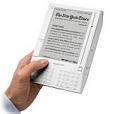
CES video/audio from TheKindleChronicles

The Kindle Chronicles podcast brings us audio and video interviews, with demos of newest E-readers at CES, by its roving reporters (Darlene too) and interviewer, Len Edgerly, whose reflections on CES are definitely unique and even poetically upbeat.

The podcast audio and 2 videos include time with (1) Patrick Mish, CEO of M-Edge, popular for creative covers and other Kindle accessories; (2) Joe Kralowetz, software director at enTourage Systems, who demos the eDGe Dualbook which has both an e-paper screen and an LCD color one for web activities -- and the 2 screens interact; (3) Neil Jones, CEO of InterRead, which makes the COOL-ER ereader, which has done well in the UK; (4) Maureen Mellon, direct of product marteting at Plastic Logic, whose Que, aimed at business professionals, made quite a splash this week, meeting predictions (here) that the Que "ProReader" would come in between $600 and $800.  Plastic Logic is selling the lower-cost 4-gig $650 model with WiFi but no cellular wireless, and the 8-gig $800 one will have 3G wireless.

Go take a look if curious about the new e-readers and the people behind them.

Bits and pieces - 09-27-09 - Update

Lots of news this last week.  Catching up here...
UPDATE 9/28/09 to add alternative smaller photos of the Kindle DX screen.  See bottom of this blog article for the smaller ones.

Len Edgerly's The Kindle Chronicles podcast continues with its weekly good stuff, and the last two weeks brought us a couple of really fun, interesting interviews.

 Friday's interview: Brad Stone.
  "Brad Stone, technology reporter in The New York Times’s San Francisco bureau, talks about secrecy at Apple and Amazon,  Dan Brown,  a Kindle developer apps store,  and the brilliant description his 22-year-old daughter had of his Kindle recently."

A trip to Belmont Library, Massachusetts:
  "Maureen Connors, left in photo, is director of the Belmont, Mass., Public Library.  She and Emily Smith, technology librarian, told me all about their impressive Kindle experiment on a visit I made to the library on Sept. 16."
  Len also provides video of the checking-out process for Kindles, including a mobile-light version also.

GOOGLE BRINGS US LIFE MAGAZINE, full original run 1936 to 1972
Google announced its partnership with LIFE Inc. "...to digitize LIFE Magazine's entire run as a weekly: over 1,860 issues, covering the years from 1936 to 1972."  I found out via a retweet by Jan Zlendich of the original tweet by @idigg of this great news.

 Don't miss The LIFE photography collection with its 10 million images, 97% of which were not published in the magazine.  These are all included in the Web and Image searches of Google.

FREE ONLINE TEXTBOOKS Offered by The University Press of Florida
The University Press of Florida will be offering free online textbooks and reduced-price print copies.  Nice trend!  
' The plan is to eventually provide free online textbooks for every general education class taught at any of Florida's 11 state universities, said Meredith Babb, director of the press.
  All they can do is offer the free books, Babb said. Professors can decide to adopt them or not.
  "Eight hundred dollars a semester [for textbooks] is stupid," she said. "Maybe the students will force the professors into some of these options. That would be nice." '
 Most of the textbooks are being made available in print as well, at 40 to 50% less than the prices of similar textbooks at other stores, she added.
  They also plan to make the e-books available in as many formats as possible.
  Thanks to Suzanne Preate and DigitalKoans for the tweeted information.

MICROSOFT'S COURIER TABLET
This pleasant surprise has even Apple stalwarts excited.  After stories that the Mac Tablet/iPAD will likely go for $800 next year when it is ever released, this one is likely to be not much cheaper, but Windows has always charged less, which is why it has about 95% of the business market despite the quality of the Apple offerings.

  GottaBeMobile summarizes the Gizmodo scoop with additional pictures and embeds the video, but here's the easier-to-read Youtube video of a computer rendering of what the 'tablet' may be able to do (these are inevitably smoother than the actual processes) .  It's said to be a prototype in the last stages of development.

  The Los Angeles Times's David Colker asks: "...but is it real?"
  Microsoft is coyly neither confirming or denying any of it :-).  ' "We do not comment on unreleased products," company spokesman Doug Free said. '

  The article points out that everything shown in the videoclip is done with fingers or stylus and no keyboard is shown. While the video'd tablet user is shown making many handwritten notes, handwriting recognition isn't shown in the video even though Microsoft's Windows 7 operating system is said to have handwriting recognition features.  That would be something.  This seems far down the road and if Apple does anything that it's rumored to be doing on a tablet, they may be out with theirs, supposedly, in February.


MY KINDLE DX - a bit off-topic about my new camera that took a picture of it)
  I got a new camera for a trip because I didn't want to bring two cameras as I had 3 years ago on my last trip.  This one will do the work of two.  Its megazoom lens goes from 28mm to 560mm with excellent clarity, though smaller cameras like this one with this kind of long-zoom flexibility always have a bit more noise/grain and also 'purple fringing' or chromatic aberration seen in big enlargements than the larger cameras will.  However, in-camera adjustments by the manufacturer at the time of shooting can cause other problems, and the fringing at 100% size (which is huge) is easily eliminated with the $25 PT lens utility, which is painless and amazing and sold by 'word of mouth' among photo nuts.

  I bought the older one (Canon SX10 IS), which is increasing in price these days because the new one (Canon SX20 IS) crams more megapixels into the same sized sensor and produces more noise and chromatic aberration than the older model.  This is okay with 4 x 6 photos but not as good at 8x10 and above.
  The attraction of the SX20 is its High Definition video.

  At any rate long-distance shots are amazingly clear and it gets closeups of things I cannot even see in the default wider/normal shooting settings.  If anyone reading has one of these, I saw good recommendations at dpreview.com forums (Amazon now owns dpreview.com, a fantastic site) to choose to shoot with sharpness =-1 and contrast =-1 and then you can edit afterward and wind up getting a very clean photo in the big enlargments.

  So, I took a photo of my DX at the ice cream shop to see if it could render the text and screen better than my other camera did, and it does.  It should, since it costs more. But it's better than I expected.  As you can see, the screen is extremely readable.

  UPDATE 9/28 - I was reminded that the photo I had originally put up was larger than the browser screen and when some browsers, by default, then resize-down the photo to make sure the full shot fits the screen, the resized version is barely legible.  So now I've now substituted the cropped version that you probably just clicked on above (it leaves the font size the same but cuts out the bottom of the Kindle) and a smaller, full shot which will fit a browser window.

(Apologies for all the experimenting.)

Kindle in the news - an upbeat week


This week saw an upswing in positive feedback on
the Kindle in the news.

  And it brought up some thoughts of my own
that I'd posted earlier to another forum.

1. Wendy Lawton, a literary agent in Santa Rosa, California, writes:
"I was at a gathering at author Lauraine Snelling’s house. Several of us had Kindles.  As soon as someone would recommend a book, we’d all go online and buy it right then and there.  Other e-readers require a computer and an internet connection to load books.  But when you’re sitting in an airport finishing a book, those things are just not available to you."
She doesn't like non-fiction on it (I do because I use the notes and search tools) -- and because you can't share the e-books unless you share an account with someone, she finds herself buying another version of the book for someone and even an audio version.  Still, she ends:
"I’ve heard so many readers say, “I could never use an e-reader.  I love the smell of a book. . .the feel of it in my hand.”  I used to say the same thing but with each novel I read on my Kindle, I’m more connected to the look, the feel the smell of it.

  Whether it’s a book or an e-reader, it’s not the device, it’s the magic of story.  The device becomes infused with the stories, settings and characters and we fall in love"
  The 'magic of story' - I really liked that.  While she is mindful of layout and presentation (just look at how well-organized and relaxing the feel of her page is), she doesn't seem to overly miss the book cover, the paper, the layout, leafing through the book.

2. For me, who had not read much for years when not on the computer where I did 95% of my reading (but for hours), it's been interesting to see how pulled I am to read on the Kindle.  In trying to explain it to the members of a writer's blog area (Catching Days, by Cynthia Newberry Martin) who had been lamenting the popularity of the Kindle because they love the look, smell and feel of books (do visit them, very good conversations there), I wrote on June 28:
" I finally realized that the rectangle acts as a sort of magic window for me (as a paper book does for others) into other worlds, so much of it available to me at any given time, depending on my mood, my need to learn something I ordinarily wouldn’t but have downloaded a book for, and I never wonder 'where did I put that book' or regret leaving it at home when out and about.  Every book I’m currently interested in is with me whenever I leave the house.  And then there are the newspapers and magazines.  I am, most of all, info-drawn.

  We who Kindle quite a bit sometimes joke that we are book readers, not book sniffers :-)  But more seriously, what is a book ?

  A collection and special distribution of words written by someone who wants to tell me something, who wants me to get lost in the world created by that person.  When an author sits down to write, I don’t think that s/he is thinking about what the cover will look like (though that always comes later) or what the layout of the externals will be.

  What I experience when reading on my Kindle is — without attention to those eye-catching externals — something that feels like direct contact with the author’s mind..."
I got carried away and wrote a lot more, but that's essentially how I personally am affected by reading on an almost weightless 10 oz. plastic tablet with a truly strange keyboard which nevertheless works well for searches and short notes.  And now I find myself reading most of the time on the heavier but even clearer larger-screen'd Kindle DX.

3. Dolph Tillotson, president and publisher of Galveston County's The Daily News writes about the many reasons he likes, though doesn't love, his Kindle, as he feels he will miss the memories a physical book can bring when encountered years later.

4. Suranand Vejjajiva, a book lover writing for The Bangkok Post describes his reaction:
" As I got hold of the electronic reading device, I felt like the first time I held an iPod and looked back to my college days when vinyl records on turntables were the norm.  Every song could now be downloaded, and soon every book would be.  Or would it not?

... Luckily I got the new version, 1/3 of an inch thick, weighs 10.2 ounces, clear text and sharp letters and, most amazingly, it is supposed to hold more than 1,500 books in this single tablet.
  The device also has other features, such as one can highlight words or sentences, take notes along the way, remember where you left off without needing a bookmark, and at a click, a dictionary appears to automatically look up words that baffled you in the past. "
But because there is no Whispernet or cellular wireless operational there, he feels the 'cracks in the digital divide'
... all of which remind me that:

5.   This Friday's weekly The Kindle Chronicles podcast by Len Edgerly included a 'Tech Tip' on "How to buy and feed a Kindle if you don’t live in the U.S." (a hot topic on the Amazon forums).  The tip was sent to Len by Charles Tay of Singapore, and he links to online tutorials by users outside the U.S.

  The weekly interview is with Steve Shank, who was the founding president of Apple Japan and Apple Australia and has decades of experience as an industry watcher and mover, so he had some interesting views of where Amazon is, with the Kindle.  He also is a Kindle enthusiast, as is his wife.

  That brought up the now common struggle with a "family Kindle" in a home with two avid readers.   Another Kindle owner (Len Charnoff?) emailed:
' The other day I knew it was time to purchase a second Kindle.  I work part time as a Manufacturer's Rep.  When I go on long trips my wife always says " Drive carefully and give me a call when you get to the Motel".  This time all she said, " Tell me you're not taking the Kindle". '
6. By the way, as mentioned on the podcast, Stephen Windwalker has just released a book with lots of good tips on how to do things not described in the User's Guide.  Give it a look.

7. And, finally, here's an article that is so positive that I disagree with its final prediction about printed books -- The Dallas Morning News's Scott Burns feels so convinced by the Kindle and other e-readers, that he suggests that the Kindle will replace physical books in the way that digital cameras have replaced film cameras.

  But books are the end result, in any text format, while photos are the end result with both types of cameras.  A fine distinction, but in no way do I think e-readers will ever totally replace books.  That would be sad, even for someone who loves doing most of my reading on the Kindle.  I still love printed books for content for which they're vastly superior vehicles, and I still will want a printed book in addition to an e-book I really loved reading and want to enjoy in a format that stands alone.

Kindle Chronicles Interview with Nicholson Baker

Update to my blog article on The New Yorker essay by Nicholson Baker on what he felt were unattractive qualities of a reading device "not ready" for the market.  My response was a longish one to what was a long article AND to the Q&A session that followed the publishing of the report -- which caused an acolyte to dub the Kindle an "inadequate device" based on the power of words alone.

  Baker's review serves as a sincere anti-ad that counterbalances Amazon's ad campaign, which Baker clearly resents and asks be slowed down despite Kindle-user excitement that he notes.  The power of a strong dismissal from a formidable platform like The New Yorker has had large, somewhat destructive effect in the past, as the interview linked to in the next paragraph reminds us.

  But a good product should be able to take it, even if the criticism left out important context.  Balance is something we can't really expect from an opinion piece, from any side of the issue.

Len Edgerly of the weekly The Kindle Chronicle podcast has done a 47-minute interview with writer Baker, and the tape was uploaded today to TKC 55 Nicholson Baker and can be streamed or downloaded (the latter is best for sound quality).  Len is always a good listener, so Mr. Baker has good time to expand on his thoughts on things Kindle and iPod in response to Edgerly's excellent questions and observations which are never confrontational but which lead to useful conversation (rare in this world?) and it's a good interview.

Len Edgerly / Bufo Calvin - recommended books

I recently came across a couple of books that I want to recommend to readers.

A Poet's Progress at Bennington - Vol 1, a mix of commentary on other poets and some of his own original poetry, by Len Edgerly, host of The Kindle Chronicles Friday podcast.

I just recently met the author in connection with his very popular podcast but have listened to his newsy and varied podcast for some time, as it's a great way to keep up with the Kindle scene.  I downloaded the book because I like the way that Len handles the podcast and the quality of his interaction with others during these weekly sessions.

  After being intrigued by the insights in his poetic output and in his thought-filled commentaries, I wrote him about things I remembered as a result of reading his often dream-like rendering of some experiences that had a rather profound impact on him.  I see that Len has written a summary of his book -- how it came about, what it contains, etc.  I highly recommend this rich collection of reflections which costs only $1  !

  I also bought his short book Cold Turkey in Paradise: Twelve Days Off the Internet at Maho Bay" which has an excellent review by Edukindle's William DeLamater, who offers the ultra useful Kindlepedia.
  An account of a grand effort to stay off the Internet while on vacation is something obviously of interest to me and since it was by the Internet-active Edgerly, I downloaded it on the spot and find that it's a very entertaining book.  I overidentified with it.  But then I do the opposite of what he chose to do -- I enjoy my vacations and then enjoy them even more when I can find the Internet at night :-)


Frequently Asked Kindle Questions
by Bufo Calvin, a regular at the Amazon forums who is much appreciated for his thorough answers to, I'd say, constantly-asked Kindle questions, or CAKQ :-).

Bufo, a professional educator, has put his comprehensive answers to all these questions into a book readable on the Kindle and makes an effort to cover the Kindle 1 and 2 as well as the Kindle DX.  Although I'd like to see some indentations in some of the answers to see the subject matter more easily, the answers are quite complete, even covering what he feels or knows are the reasons for some of Amazon's decisions, including policies described in Kindle guidelines such as book and account sharing and current limitations on international purchases.  Any Kindle owner should get a copy of this book, especially when all this comes for only $1.

  Bufo has other Kindle books available, including one with ready-links to free books for the Kindle and advice on navigating some of the sites involved, and another that advocates for customers with disabilities -- explaining the controversy over publisher/author-disabling of obviously computer-voiced text-to-speech (proceeds for this one go to purchasing Kindles for non-profit organizations).

The Kindle Chronicles podcast by Len Edgerly

The Kindle Chronicles is the very popular Friday Podcast by Len Edgerly for listeners who'd like to know "All About the Kindle."  It includes sections on News, Tech Tips, a weekly Interview, a Quote, and Comments received from the Kindle community during the previous week.

 Len, after reading some of Kindleworld, invited me to be the guest this week and we talked about the latest Kindle events.   Quick, sharp, and enthusiastically curious about much more than things Kindle, he is also a relaxed, engaging interviewer.  Catch his very interesting blog "Random Reflections."

  A graduate of Harvard, and also the Harvard Business School later, he's worked as a business journalist, was an editor of an Energy magazine and an executive at a natural gas company before then getting his Masters in Fine Arts in poetry.
  Am looking forward to Len's first poetry collection for the Kindle.  Here are Len and his wife Darlene, who recently interviewed him for the podcast when an Amazon executive suddenly postponed.

  He has a large Twitter following at http://twitter.com/LenEdgerly.  Len's Kindle Chronicles, begun July 2008, is practically a log or history of the Kindle and its impact on readers and the publication world in the short time since its release.

You can review a full log of The Kindle Chronicles programs and interviews (on one page) going back to mid 2008 here.  There are options on that page to subscribe via iTunes (free) or get feeds via any of several podcatchers.  Highly recommended.