Showing posts with label coursesmart. Show all posts

Small E-Readers and Media Hype


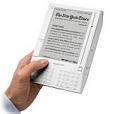
The New York Times
reports on the unsatisfactory experience of attempting to use the much-hyped "eTextbook" iPhone app for CourseSmart's 7,000+ textbooks.
    Click on the image at the left to get the larger image.

This is an update to earlier blog articles on CourseSmart and its e-textbooks:
  . How to Save on College Textbooks
  . CourseSmart offers 7,000 textbooks on iPhone/iPod
  . Textbooks, the iPhone, and the Kindle

The New York Times's Randall Stross does something highly irregular in this fast-paced gloss-over news-scanning Net world -- he actually tries using a product before drawing conclusions in 'killer' headlines based on little.  Too often the articles focus on "the look" of things, the 'sexiness' of a metallic or plastic form, the 'cool' factor -- if you can pocket it, it has to be better.

  As a user of nearly pocketable cameras I understand the feeling, but if the camera doesn't do the basic job for the cost, I'd not be proclaiming the smallness of it the best way to go for producing a good result or saying one doesn't need the larger cameras and they are therefore "killed" - a favorite concept for gadget hounds chasing the latest dragon slayer.

Stross points out that squeezing the contents of an enormous printed textbook -- normally using considerable space for hundreds of words, the occasional illustration and lots of "restful white space" -- into the credit-card sized space of smart-phone displays can cause a painful experience.

CourseSmart has tried, and my guess (since they did not reformat the books for the smaller display size) is that they hoped to get a more attractive deal from Amazon if the textbooks were already on the iPhone.  Otherwise, what sense does it make -- to have to buy the version for iPhone which requires a connection to the Net (even if alternately using a laptop for that e-version) and buy another version to be able to read offline in a more natural way?

Stross describes what it's like to actually use a CourseSmart textbook on the iPhone while connected online as required:
' [CourseSmart's iPhone app] uses a PDF image of each page, as does the browser-based version of its eTextbook. All of the charts, graphs and design elements are intact, but everything — including the text — is indecipherably small without zooming in.  Enlarging the text to legible size introduces the need to scroll left and right for each line, which quickly grows tedious.
  Even when used on a PC monitor or laptop, Stross says,
Generally ... just half or two-thirds of a single page is displayed at once.  Successive clicks take you to the bottom of that page, to the top of the adjacent page, and to the bottom of that page. After every page change, the screen goes blank momentarily before refreshing.

  Frank Lyman, executive vice president of CourseSmart explains that the use of the iPhone for the text can be helpful if
  " you’re standing outside of the classroom, the quiz is in 10 minutes, and you want to go back to that end-of-chapter summary that helped you understand the material.”"

  Stross continues:
' The iPhone doesn’t actually store the image files: a page must be downloaded on-the-fly when requested, which I found to take 9 to 13 seconds, using a Wi-Fi connection.  The downloaded page isn’t saved, so moving to another page, then returning, means downloading it anew.  Rummaging around for a particular passage in a chapter, easily done in a printed book, is an agonizingly long process on the iPhone. '

On August 12, when CourseSmart announced its iPhone launch, I asked this question:

"Does this mean that the students will also need to buy a hard copy text book for the "homework" portion as well as pay half the cost of another textbook in electronic format which they'd need to return to CourseSmart at the end of 180 days?"

 The New York Times reports that:
' At present, a student without a trust fund is probably not going to get both the printed textbook and a subscription that provides access to the eTextbook version; they are now sold separately.  When asked if publishers would be willing to offer both for the price of one, [Ed Stanford, president of McGraw-Hill Higher Education] said his company was considering offering the eTextbook for a “nominal” price to buyers of the print version.


Larger format e-readers, not mentioned above but available currently:
Kindle 2   Sony Readers   Kindle DX.

Also see:
  . Sony's Upcoming Models vs Amazon Kindle
  . Some points from reports on the new Sony readers

Textbooks, the iPhone, and the Kindle - Update2

This is an UPDATE to yesterday's entry on the 7,000 CourseSmart e-textbooks now made available for the iPhone and iPod.

 Currently, a search at Amazon for textbooks not in the public domain results in about 4,400 titles, although a good number of them are not what you'd expect to see categorized as textbooks.
UPDATE 8/14/09 - Original Update was 8/13/09, 8:19 AM.
  The above "textbook" results (official textbook store not in place yet) were sorted by "relevance" -- here's a listing sorted by "bestselling" titles.

Some more detail is available about the app's functioning and the type of access available, and there are 2nd day assessments by some of the review sites.

1. SmartCourse e-textbooks can be purchased for download to your computer/laptop but are allowed to be used on only one device at a time.  If you buy one for your laptop, it doesn't seem to come with a subscription to access it online at their site.  There is no return on these, no refund.

2. Their e-textbooks can also be purchased for ONLINE access only, and with this subscription type, you can use any computer/laptop or iPod/iPhone to access the e-textbook.  In this mode, you cannot read the book unless you have a connection and are online at their site.  The subscription allows you to copy or print 10 pages at a time.  You can return the book within 14 days if you haven't printed or read more than 20% of the e-book, online.

3. In this first edition of the iPhone app, you can't add or edit notes with the iPhone/iPod, but you can view any notes you've made when using your computer/laptop to access the e-book online.

4. The "half-price" "purchase" is really a subscription rental, in that you must return the book at the end of 180 days (or 360 days if you buy a year's subscription) and then you can't reference the book if needed for your next, more advanced class on the subject.

5. CNet's Rick Broida writes:
' Long bouts of reading might prove cumbersome, as the app doesn't reflow text to fit the screen the way, say, the Kindle app does.  Each page is more or less a static image, much like a PDF. You can zoom in, scroll around, rotate into landscape mode, and so on. '
6. Your 3G cellular reception in class will have to be good.

7. The screen, especially noticed when used for a textbook, is very small.  The image above is from their website's demo and I couldn't find an image with fewer and larger characters on it.  If I were a student using the iPhone with a CourseSmart e-textbook, I'd likely always be in zoom mode.

8. PC World's Todd R. Weiss, with some whimsy, wonders:
' Then there's the potential for cheating at exam time when students can stealthily view their iPod to get information from an e-textbook to answer a tough exam question.  Hey, it could happen.  Maybe you'll have to leave your iPhones and iPod Touches at the door as you enter the exam room to prevent cheating.  Could we eventually see students being patted down by hand for their iPhones or iPod Touches at exam time as they enter the room? '


Photo credit: This a screen capture from the SmartCourse page at actual size shown there

CourseSmart offers 7,000 textbooks on iPhone/iPod

CourseSmart launches iPhone app that allows access to 7,000 electronic textbooks.

  See earlier article on CourseSmart digital textbook lease terms at "How to save on college textbooks."

  Students will be able to read digital notes and search for specific words and phrases from their iPhone or iPod Touch units.
' Frank Lyman, CourseSmart's executive VP, does not expect students to use their iPhones to do their homework, but explains that "if you're in a study group and you have a question, you can immediately access your text." '
Does this mean that the students will also need to buy a hard copy text book for the "homework" portion as well as pay half the cost of another textbook in electronic format which they'd need to return to CourseSmart at the end of 180 days?
' CourseSmart will offer digital textbooks for around half the physical textbook's retail price.  However, the service operates on a subscription basis which expires after 180 days.  After that point students lose access to the title. '

  Obviously, with battery concerns and a small screen with light going at one's eyes, the e-textbook on an iPhone would not be expected to be used for reading the textbook but, as said, for searches and reading of notes.  The article continues:
' CourseSmart's titles are not yet available on the Kindle, but Lyman hopes to see his books available wherever college students want them... '
  I read elsewhere that there've been no talks with Amazon as of this week.

How to save on college textbooks

An AP article carried by Cleveland Ohio Business News suggests "3 ways to save on college textbooks"

The article points out that publishers are now offering to rent books or are providing electronic versions at what AP says is a fraction of the cost and that, next summer, colleges will be required by federal law to "list the cost of required materials in online course schedules.  Publishers will also need to disclose book prices in marketing sent to professors who may not realize the costs"

Until then they suggest
1. Renting.  They give Chegg.com as an example - that site is renting Introductory Chemistry for a semester for $44 while the list price of the book is $140.  They have a catalog of 1.6 million titles and say they will try to track down books requested that are not in the catalog.  While the student pays for shipping, returns at the end of the semester are done with prepaid envelopes.
  BookRenter.com works similarly and there is an option to buy at the end of the rental period, with credit for the rental price.  Both places offer refunds if a class is dropped - within 30 days at Chegg.com and within 10 at BookRenter.

2. Buying Used.  The AP article states that used books cost almost as much as new ones, at campus bookstores, so they recommend going online to Barnes & Noble, Amazon, and Borders for better pricing, where the condition of a book is often described by the 3rd-party sellers (rated by users) and online coupons or special sales are offered in email by the bookstore chains.

3. Digital books.  Coursesmart.com offers about 7,000 titles and the company says that its e-textbooks are, on average, half the price of new print copies, and have the same layout so there's no confusion over what 'pages' are assigned.  Print copies are available too.  There is rather limited copy & paste allowed but students can print 10 copies "at a time" (whatever "a time" means).  Highlighting is also a feature.
  Cengage Learning makes its titles available electronically at iChapters.com.  Unlike e-books bought for the Kindle or Sony readers, the books at both companies can be kept for only the equivalent of a semester and can't be used later for referencing.  These are not bought but leased then.

 The Kindle DX and Sony Reader are also mentioned, but it's pointed out that some textbooks won't be available for them.  They add:
" Three textbook publishers -- Pearson PLC, Cengage Learning and John Wiley & Sons Inc. -- have agreed to make books available on the Kindle. But representatives for Kindle and Sony did not respond to questions about the breadth of their textbook selections or prices.

As an example, however, "An Introduction to the Standard Model of Particle Physics" cost $45.45 on the Kindle, compared to $75.11 for a new copy from third-party vendors. "