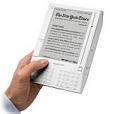

After Amazon's reduction of the Kindle 2 price from $259 to $189, I noticed quite a few positive articles about the Kindle, though it had actually started about a week before (and a couple of these are from then) when reporters and columnists probably had written all they could about the iPad and were refocused to the iPhone 4.
Here are some of the thoughts I gathered over the last few days.
Forbes, and iSuppli
Forbes.com's Lee Gomes wrote in The Economics of Kindle
' The price reduction caught the attention of iSuppli, an analysts' firm known for taking apart gadgets to estimate how much they cost their manufacturers to put together.
According to iSuppli's figuring, Amazon and Barnes & Noble are no longer making money on the e-readers, as the costs of the "bills of materials" for the devices are equal to what they're being sold for.
"With zero profits on their hardware, both these companies now hope to make their money in this market through the sale of e-books," iSupply says. "This is the same 'razor/razor blade' business model successfully employed in the videogame console business, where the hardware is sold at a loss and profits are made on sales of content."
. . .
E-readers aren't the first gadget to be offered at little or no profit with the expectation of some future revenue stream, as that's essentially the model for many gadgets. Except, of course, those sold by Apple.
A $500 iPad, says iSuppli, costs Apple just $259.60 to make. '
Trefis.com
Trefis Team reports
'Three Amazon Initiatives That Can Make eBooks a Billion Dollar Business
...increased Kindle unit sales as a result of the price cut will benefit eBook sales by increasing the e-reader user base (classic razor / razor blades model developing here).
...consumers can buy an eBook from the Kindle store and read it on a Kindle, iPhone, iPad, or Android-based device (smartphone or tablet). So even though the iPad has outsold the Kindle, Amazon still benefits from potentially wider distribution than it had before the iPad was introduced.
...Kindle has an edge over Apple in terms of the availability of eBooks. Kindle has about 600,000 eBooks in its store. This also includes 109 of 112 of the New York Times bestsellers.
In comparison, Apple’s iBook store has far fewer NYT best-selling titles. '
This assessment by them raised my eyebrows:
'Amazon Could Earn $800+ million in 2010 from eBooks Sold to Kindle Owners
According to the research done by Foner Books, Amazon could be selling around 24 eBooks per Kindle per year.
If we consider about 3 million Kindle units in use in 2010, Amazon could sell 72 million eBooks for 2010.
If we consider the average pricing to be around $12 per eBook, Amazon could be earning $864 million in 2010 from eBooks alone that are distributed on the Kindle device.
The upside can be even greater if Amazon succeeds in becoming the eBook store of preference on the iPhone (50+ million sold), iPad (3+ million units sold) and Android-based smartphones / tablets...
If current trends continue, there will be more than 100 million iPhone, iPad and Android-devices in use within the next 1-2 years. Even if each device were to download only one eBook through the Kindle store annually (at $12 a piece), that would imply $1.2 billion of Amazon sales from non-Kindle devices. '
They also speculate that revenue from e-books could increase at a faster rate than they are forecasting if Amazon were to benefit from higher Kindle sales and traction on non-Kindle devices. With the substantial price cut this week, I imagine they will definitely have higher Kindle sales.
Hydrapinion
Hydrapinion's Adam Turner writes:
' The iPad might be a jack-of-all-trades device, but it's certainly outclassed as an eBook reader by the likes of Amazon's Kindle. The 6-inch Kindle outguns the iPad in terms of size, weight, battery life, screen technology, price and range of books (especially if you live in Australia, where Apple's iBookstore only features public domain titles).
Amazon has just slashed the price of the 6-inch Kindle to $US189 - making it an even more attractive alternative to Apple's wunderslate.
The iPad is an amazing device *if* you can find a good use for it. If you think that use might be as an eBook reader, I certainly recommend you consider the alternatives before handing over your money. '
Huffington Post's Rafi Mohammed
Rafi Mohammed writes that
' Instead of wishfully hoping that e-books will remain a niche product, publishers now have to realize that e-books are officially a game changer. If an increasing percentage of readers choose to read electronically, it's foolish to thwart e-book sales (which are more profitable due to cost efficiencies) with tactics such as delaying the digital release for months after the hardcover is in stores. Consumers aren't going to wait. The pathway to survival for publishers is straightforward: publish (and promote) e-books or perish. '
Well said !
CNBC's guest expert on money and markets
Michael Yoshikami writes wisely: iPad & Kindle—Room for Two!
' ...Perspective matters.. one of the most popular applications for the iPad as of today is the Kindle reader. The iPad is designed for internet browsing and running applications, whereas the Kindle is best suited for reading text. As such, demand for the Kindle could hold up over time as the best way to read digital books. '
Amazon is releasing a version of its reader software to Google's [popular Android platform which means Kindle books will be available on Macs, PCs, and virtually all smartphones. As a first entrant into the e-reader market, Amazon is clearly the leader in content and is compelling consumers to stay with their format to avoid the need to buy new material for new devices.
. . .
Kindle continues to be a multi-billion dollar opportunity for Amazon, and will likely grow as more and more consumers get used to the idea of e-readers. Amazon can succeed with its own Kindle reader and the iPad platform.
TopNews
Seher Dhillon points out, in E-Reader Fever Goes On, that
'...customers still welcome the truth that gadgets such as the Kindle have extraordinary screen display technology that lessens strain on the eyes caused by characteristic LCD screens like the one used in the iPad. '
The Guardian
Robert McCrum on Books, for The Guardian, notes that
' E-book sales increased a staggering 177% in 2009, admittedly from a very low base.
Everywhere I travelled there were Americans reading Kindles. On the New York shuttle I estimate that as many as 10% of the passengers were reading books or magazines and newspapers on screens. Every New York publisher I spoke to is grappling the profound implications of the shift to the virtual book.
. . .
If you like the book review you read in the New York Times on your Kindle you can download the e-book from Amazon with one click. Some say the hardback will even benefit from this proliferation of e-reading as book lovers acquire hardbacks as lasting souvenirs of a fleeting, electronic literary encounter. '
TMCnet's infoTECH Spotlight
Gregory Karp, a personal finance writer for The Morning Call newspaper in Allentown, Pa., writes
' [ In finding "Justification to spend money on hottest tech gadgets," before the price decrease ]
THE AMAZON KINDLE: ... Savings come from two sources: cheaper reading material and free wireless service.
. . .
Assume that during a year you substitute two $25 hardcover books and four $15 paperbacks for the $10 Kindle versions. And assume you swap a Kindle subscription for the paper version of The Wall Street Journal at an approximate non-introductory price of $250 per year. Total annual savings: about $120.
. . .
Another source of savings is the Kindle's crude Web browser with free wireless service. It's tedious to surf the Web using it, but you can check Web-based e-mail and read a few news headlines for free. If that can substitute for a $20-per-month smart phone data plan, that saves $240 per year.
[ Emphasis mine ] . . .
You also will never have to rebuy a lost book. Kindle books are always available to download again. And you can use the Kindle's voice reader to read aloud some books, potentially substituting for audio-book purchases. '
Bloomberg Businessweek
Bloomberg Businessweek's Rich Jaroslovsky focuses on the joys of beach reading.
' One of the joys of the beach is beach reading, and the era of the e-reader means no more lugging that extra bag of books -
. . .
Apple Inc.’s iPad is the all-around best, but its glaring weakness is, well, glare.
The backlit display and reflective screen make it hard to use in sunlight, even if you weren’t concerned about getting sand in the virtual gears of your $829 3G-enabled baby.
By contrast, Amazon.com Inc.’s Kindle thrives outside. Its grayscale digital-ink display is easily readable even in direct sunlight, it weighs a mere 10 ounces and goes for days on a single charge.
The built-in AT&T 3G connection lets you buy and download books anywhere you happen to be, taking advantage of a selection that far surpasses Apple’s nascent iBookstore ...
... as an added bonus, Amazon’s family of free Kindle apps syncs your reading material across devices, so you can pick up on your iPad precisely where you left off on the Kindle. '
An interesting bit of Amazon history
In "Amazon, eBay and Financial Momentum," Practical eCommerce tells us that
' "Both companies are publicly traded, and both are ecommerce pioneers. Jeff Bezos launched Amazon in 1994 as an online bookseller in a Seattle garage. He rigged-up a bell to ring every time an order came through.
Yahoo! then mentioned Amazon as a “cool” site, book orders poured in, and the bell wouldn’t shut off.
Amazon has since diversified its product line. Bezos is now 46 and Amazon has roughly 24,000 employees. It sells books, movies, games, electronics, computers, consumer goods and much more. '
Another interesting tidbit
In "The iPad and I: Of Love and Meh," Elizabeth Bluemle writes about books that provide movement and 3D features as important elements of their digital offerings:
' The biggest problem with adapted e-books: the transformation of it into a one-way experience, beaming out at the viewer like a TV show.
With recent studies showing that the human brain while watching TV is less active than the brain while it’s asleep (!), this is something to think about.
There is a danger in losing the conversation that a book sparks between writer and reader. '
That's all for now ...
Check often: Temporarily-free late-listed non-classics or recently published ones
Guide to finding Free Kindle books and Sources. Top 100 free bestsellers.
