Showing posts with label library. Show all posts

Seneca Grade School Library and its Kindle program


Kathy Parker
, school librarian for 33 years for Seneca (IL) Grade School, is active on Twitter (@MariansLibrary) and reads on a Kindle—and now so do many of her seventh and eighth graders who use the Amazon Kindle in a language arts program she helped launch last year.

  The school bought six Kindles in 2009 and downloaded some titles that summer.
' By the fall, seventh and eighth graders were sharing 18 devices and reading novels, ranging from Gary Schmidt's The Wednesday Wars (Clarion, 2007) to Lisa Graff's The Things About Georgie (HarperCollins, 2007), for class assignments. Within six months, older students were bringing the devices home.

 The pilot program, which cost about $2,800, proved so successful that after a presentation to the Board of Education in December, Seneca CCSD 170 Superintendent Eric Misener helped secure funds to buy Kindles for every eighth-grade student, along with enough devices for one seventh-grade class to use this year. '

The article cites support from Twitter followers like Will DeLameter who runs the Edukindle website.  He alerted others, including M-Edge Accessories, which is donating covers for all the Kindles.

  Parker pointed out that her budget takes into account that each book can be downloaded onto up to six devices for the cost of the one book.
' She says it's well worth the investment as she's seen firsthand how students respond to being able to change fonts, using the text-to-speech feature, and even having the devices display what percentage of the book they've completed.

  "The bottom line for me is the Kindles have generated a love of reading among those students who would not have otherwise picked up a book," she says. '


 See the ongoing Guide to finding Free or Low-Cost Kindle books and Sources
  Check often: Latest free non-classics, shortcut http://bit.ly/latestfreenonclassics.)

TKC interviews "Library w/o Books" headmaster Tracy

UPDATE: 9/11/09 6:48PM PDT - Podcast 60 is ready.
UPDATE2: midnight - Podcast Extra: Library tour and actual plans
A bit of nostalgia in the image to the left... Note the laptops on the tables of course :-)
  Clicking on the image or on the next link takes you to a brief story on the surging use of the New York City Library though it's not due to the best of reasons -- but it's a good and welcome resource for those who need to find a job in a world requiring wired access.  The article's actual title is "The Library Renaissance."

The article also links back to an article in March on the library's efforts to help jobseekers and points out that "...with Web sites largely having replaced newspapers as the most common job-listing venues, finding work without Internet access has become increasingly difficult."

In connection with the recent story on "A Library Without Books," the Boston Globe article, had said that Cushing Academy had "...decided to give their collection - aside from a few hundred children’s books and valuable antiquarian works - to local schools and libraries," although the Globe's writer, David Abel, mentioned, in another paragraph, that the school's administrators had "decided to discard all their books and have given away half of what stocked their sprawling stacks " -- many have been disbelieving that a school would do this.

 Others, as I mentioned in the Comments area, had seen this as understandable for a school library as opposed to a public library, because in a college-preparatory school like this, the library is used mainly for a quiet and WIRED place for students to go with their laptops.  Students are focused on specifically-assigned books, and the Net gives speedier search access to additional information on those assigned topics -- while a public library acts as a physical database of materials the general public can browse at leisure, though they also have considerable wired access now and terrific online-resources, generally.

  Also, most junior high and high school libraries don't have 20,000+ books in them.
 Cushing Academy has only a few hundred students and the annual fee for attending the school is between $31,200 and $42,850 -- not your average college-prep school.

The reaction has been quite divided, and Len Edgerly of the popular podcast, The Kindle Chronicles, decided to interview the apparent driving force behind the changes, headmaster James Tracy, on the school's library plan.  Many are concerned about the precedent.

  Edgerly has said on Twitter that "Globe's got it wrong" and expanded a little in an email when I asked him about this before we are able to hear the interview when it is uploaded Friday night 9/11/09 (tonight) to the Kindle Chronicles site.  He gave me permission to quote him.
' The TVs are essentially computer monitors, available for kids to work collaboratively on, with controls somehow at their seats.  Also, the Globe got it wrong - the school library will have 10k books of the 20k there now, and several other thousand are being distributed to departments. So actual reduction in volumes is about 7K or 8k...

Any volume which was donated to the school as a memorial is being retained in the collection.   They see the new library becoming the epicenter of the school for students and faculty, compared with its former reality as a little-used collection of traditional books infrequently visited by anyone...

Slide 4 caption includes this: "Cushing Junior Tia Alliy shelved a heavy volume onto a shelf holding the spared books." In fact, that shelf is one of half the original shelves still in the library." '

 That last caption is reassuring when the Boston Globe titled another caption with the contradicting "The school's new "learning center" will have no books -- they have been donated or discarded." -- unless they mean the 'spared' books will be available where they are donated.  All in all, it was a very confusing article, as it turns out.

A look at the full range of Dr. Tracy's approach to the topic can be seen in a talk he gave at a symposium, "Libraries Beyond Books: A Call for New Paradigms."  It's an interesting read, but his choice of words is not always helpful for his case, which can sound 'extreme' when he writes: "This is why, at Cushing Academy, where we are dedicated to forging the most far-sighted pedagogies for twenty-first century education, we have decided to be bookless within a year."

So, in light of all of the above, I recommend that all interested tune in to The Kindle Chronicles Podcast sometime Friday night to hear or download Len Edgerly's interview with headmaster Tracy.  There's now the podcast Extra of a tour of the library and a look at the mockup of their actual plans, with Bruce Lemieux, Director of Technology, and Susie Carlisle, Dean of Faculty and Academics.

  The weekly podcasts are also available as a free-subscription at iTunes and will remain available at the podcast site.
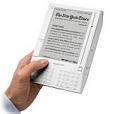
A Library Without Books


As a Kindle enthusiast, I found the following news not only jarring but very sad, since I imagine that most Kindle users will be people who love books.
  At first I thought the story couldn't be true, but a sample statistic they give of actual usage of the library was also grim.

The Boston Globe's David Abel reports on the mind-boggling decision by Cushing Academy administrators to discard all their books in favor of a digital future.  James Tracy, headmaster, sees books as "an outdated technology, like scrolls before books."

The academy will spend $500,000 to instead create a 'learning center' -- with reading stacks replaced by "three large flat-screen TVs" projecting Internet data and by "special laptop-friendly study carrels."

In place of the rejected books will be "18 electronic readers made by Amazon and Sony," which will be stocked with digital material.  Those with no access to e-readers will be expected to do research and read assigned text on their own computers.
' Instead of a traditional library with 20,000 books, we’re building a virtual library where students will have access to millions of books," said Tracy, whose office shelves remain lined with books.  “We see this as a model for the 21st-century school."
  The feeling is not universal there.  Librarian Liz Vezina says she never imagined being the director of a library without books. And ...
' Alexander Coyle, chairman of the history department, is a self-described "gadget freak" who enjoys reading on Amazon’s Kindle, but he has always seen libraries and their hallowed content as "secular cathedrals." ... A lot us are wondering how this changes the dignity of the library, and why we can’t move to increase digital resources while keeping the books. "

But there are others who are in step with headmaster Tracy:

' "We see the gain as greater than the loss," said Gisele Zangari, chairwoman of the math department, who like other teachers has plans for all her students to do their class reading on electronic books by next year.  "This is the start of a new era." '

Others lament the decision, of course.   But here are other views that were also surprising, and the sample statistic I mentioned is also shocking to me:
' Yet students at Cushing say they look forward to the new equipment, and the brave new world they’re ushering in.

Tia Alliy, a 16-year-old junior, said she visits the library nearly every day, but only once looked for a book in the stacks.  She’s not alone.  School officials said when they checked library records one day last spring only 48 books had been checked out, and 30 of those were children’s books.

"When you hear the word ‘library,’ you think of books," Alliy said. "But very few students actually read them. And the more we use e-books, the fewer books we have to carry around."

Jemmel Billingslea, an 18-year-old senior, thought about the prospect of a school without books. It didn’t bother him.

"It’s a little strange," he said. "But this is the future." '